Indo-European Table 1, Etruscan Vocabulary with
Indo-European cognates
8.11.2021 Etruscan etymological relationships to other
Indo-European languages; Proto-Indo-European
(PIE):
Etruscan_Phrases
Indo-European Table 1,
Part 5 (of 11 Parts)
by Mel
Copeland
(from
a work published in 1981)
This table has
Indo-European, Hurrian, Georgian
(Kartlevian), Latvian (Baltic) and Finnish
(Uralic) and Akkadian selections. We have
colored words that may be related among the
various languages/families. The coloring
provides an unusual view of the mix of the
cited languages. A Concordance with Akkadian
is included in our Copeland-English-Akkadian
Dictionary.
Table 1, Section 1B:
Indo-European words as they relate to
Etruscan. Notes: *Armenian W = West Armenian;
E = East Armenian.
Sanskrit
Avestan,
Persian, Georgian, Hurrian, Akkadian
Slavic, Baltic,
Romanian,
Finnish-Uralicx
xx
x
Greek, Armenian, Albanian,
Basque
Latin
other
Other
English
Etruscan
x
ânhâ,
آنها
them,
išân, ایشان
they
(Persian)
მათ, mat, them, ისინი,isini, they
(Georgian)
šâšunu,
them, for them, as
for
them, those, the aforementioned, masc. pl.,aššunu,iššini (f.),
iššunu,šuni, šunu,
they, šina,šināti,
they, those, the aforementioned, šât, they
of, those of, which (Akkadian)
іх, ich, them, яны,
jany,
they (Belarusian) ih,
them, oni,
they (Croatian) ich, im, je, them, one, they, do nich, to them
(Polish) viņiem,
them, viņi,
they
(Latvian)
le, lor, them, ei, they
(Romanian)
niitä, them, ne, they
(Finnish-Uralic)
τους, tous,
them, their, αυτών των, aftón ton,
of these, δικός τους, dikós
tous, theirs, τους,tous,
them, their, αυτοί,
aftoi, they (Greek)
նրանց,
nrants’,
them, նրանք,
nrank’,
they (Armenian) ata,
they, them, ato, they,
them, those, u, to them
(Albanian)
horietako,
them, haiek,
them, those, they (Basque)
les, legis, f.,
contract, covenant, agreement, law
iad,
them, siad,
they (Irish) iad,
them, iad, they
(Scott)
nhw,
them, they (Welsh) loro,
them,
esse,
essi,
they (Italian) leur,
them, elles,
ils,
they (French)
shê [ta]
for him, his (Avestan)
u, vey, ân,
he, she; ân,
ân ciz, it; ânân, isân, ânhâ, they; isânrâ, be
isân, be ânhâ,
them, (Persian)
მას,
ეს, mas, to
him, it, (Georgian)
'-ni (sing.), -na
(plur.), him (Urartian)
яму, jamu
to him, (Belarusian)
njemu, to him
(Croatian)
ono, to, do niego, to him (Polish)
viņam, to him
(Latvian)
LUI, to him, LU to him
(modern & old Romanian)
hänelle, to him
(Finnish-Uralic)
σε αυτόν, se
aftón, to him (Greek)
նրան, nran,
to him (Armenian)
për të,
to him, ai, ajo, atë, ky, kjo (Albanian)
berari, to him (Basque)
hic, haec, hoc; is, ea,
id, ille, illa, illud
dó, to him
(Irish) dha, to him
(Scott) iddo fe,
to him (Welsh)
a lui, to him
(Italian)
à lui, to him
(French)
-(ä)ṃ,
him, her, it
(Tocharian)
(ä)ṃ, him,
her, it (Lycian)
-si-,-a-,-an,him, her it, se, for him, for it,
(Hittite)
it? to him [<OE], it?
5-3
lo (Lv),
Script N311, Q152, Q202, Q224, R554, K113,
PB-2
hvalati, to
totter, kṣayaḥ, to fall,
ruin, decay, hrāsaḥ, to decline, decrease
tivtiv,تلوتلوtotter, tiv
tiv kardan, تلو تلو
خوردن to totter, ivi kardan, رد
کردن reject, throw down, ofthɒːˈdæn,
افتادن
to fall, drop, pas
raftan, پس رفتن
to decline, recede (Persian)
განადგურება, ganadgureba,
to totter, დაცემა,
datsema, to
fall, შემცირება, shemtsireba, to decline,
იმედგაცრუება, imedgatsrueba,
let down,
(Georgian)
kud-, to fell, kut-,
kud-, to fall, (Hurrian)
maqātu, to fall down, to fall, to fall to the
ground, into a pit, to fall upon something, to
fall in battle, to suffer a downfall, afflict,
etc. (Akkadian)
пахіснуцца,
pachisnucca,
to totter,
падаць, padać,
to fall, зніжацца, znižacca,
to delcine (Belarusian) pustiti,
to totter, teturati,
stagger, totter, to barge, pasti, to fall,
odbiti, to decline, spustiti,
let down
(Croatian)
nolaidīt, to totter, krist, to fall, atteikt,
to decline, nolaisties, to let down (Latvian)
a totter, to
totter, a cădea, to fall,
LEPĂDA, to let
something fall, let down, clătina,
to shake, stagger, wobble, totter, sway, rock, diminua, to
decline, diminish, decrease (Romanian)
nääntyä, to totter, tottua,
to totter, pudota, to fall,
kieltäytyä, to decline,
(Finnish-Uralic)
να γεμίσει, na
gemísei, to totter, να πέσω, na péso, to
fall, να μειωθεί, na meiotheí,
to decline (Greek)
սայթաքել, sayt’ak’el,
to totter, ընկնել, ynknel,
to fall, հրաժարվելու համար, hrazharvelu
hamar, to decline
(Armenian)
për të lëkundur,
to totter, të bjerë,
to fall, decline, lë në baltë, let
down (Albanian)
desbideratzeko, astindu,
to totter, erori,
to fall, gainbehera,
to decline (Basque)
labo-are, to totter,
begin to fall, labor,
labi, lapsus, to
decline, fall down,
cado-ere, cecidi, casum, to fall, to
droop, die, be killed, diminish, etc.
iomlán,
to totter, decline, titim, to fall
(Irish) iomlan, to
totter, crìonadh, decline, tuiteam, to
fall (Scott)
cyfansawdd, to totter, dirywiad, decline, i syrthio,
to fall (Welsh)
barcollare,
to totter, cadere,
to fall,diminuire, to
decline,
decrease,declinare,
to decline, wane (Italian)
chanceler, to totter, tomber, to
fall, à diminuer,
to decline, décliner, to
decline, wane (French)
ટોલ
કરવા માટે, Ṭōla karavā māṭē, to
totter, પડવૂ, Paḍavū, to fall, નીચું
પડવું, Nīcuṁ paḍavuṁ,
to decline, fall down (Gujarati) sendelemek,
to totter, stagger, düşmek,
to fall, azalmak, to
decline, decrease
(Turkish) толқу,
tolqw,
to totter, құлау, qulaw, to
fall, құлдырау,
quldıraw,
to decline
(Kazakh) buzmoq, to
totter, yiqilish,
to fall, pasaymoq,
to decline, drop
(Uzbek) ларзидан,
larzidan,
to totter, афтодан,
aftodan,
to fall, паст
шудан, past şudan, to decline (Tajik) олку-солку
болуу, olku-solku
boluu, to
totter, жыгылуу,
jıgıluu,
to fall, төмөндөө,
tömöndöö,
to
decline
(Kyrgyz) ганхах,
gankhakh,
to totter, унах,
unakh,
to fall, буурах,
buurakh, to decline, decrease
(Mongolian) 蹣跚, Pánshān, to totter, stumble, 跌倒, Diédǎo,
to fall, 下降, Xiàjiàng,
to decline,
decrease
(Traditional
Chinese)
[B klāyā-], to fall
down, klālune,
falling (Tocharian)
mauszi,
mau/mu,
mau/mu/maus,
maus-,
to fall, EGIR-pa maus-,
to fall backward,kattan,
to fall down, mumiadr,
to fall, collapse, lag,
to fall, lak/lk,
to knock out a
tooth, to turn one’s eyes and ears towards
something, to train a vine, topple something,
lak-,
to fall, slant, to tilt, to submit, lilak,
to fell, kappae,
kapae, to diminish, reduce, tepnu, to
diminish, tebnu,
to diminish, despise (Hittite)
totter, [MDu,
touteren,
to swing], begin to fall;
decline, fall, [<OE. feallan] down?, decline, [<Lat. declinare, to turn
aside], diminish,
[<ME. deminishen]
mukīl šulbȋ,
lock, (lit. which
holds the bolt), ḫargullu,
lock, muzzle,edēlu,
to lock, edlu,
locked up, imprisoned, eslu,
locked up, constipated, gāmiru,
bolt, mēdelu,
bolt, bar of a door, mēdelu,
in šamēdeli,
man in charge of the bolt of the gate (Akkadian)
правакаваць, pravakavać,
to provoke, зашчапка, zaščapka,
latch, замыкаць, zamykać,
lock (Belarusian)
izazvati, to provoke, reza, latch, zaključati,
lock (Croatian)
prowokować,
to provoke, incite, ygiel, lock,
bolt, zatrzask,
latch
(Polish)
να προκαλέσει, na
prokalései, to provoke, μάνταλο,
mántalo,
latch, κλειδαριά, kleidariá,
lock (Greek)
հրահրել, hrahrel,
to provoke, փակել, p’akel,
latch, կողպեքը, koghpek’y,
lock (Armenian) provokoj,
to provoke, shul, latch, bllokohet,
lock (Albanian)
probokatzeko,
to provoke, zirikatu, to provoke,
incite, tempt, blokeatu,
giltzapetu,
to lock, blokeoa,
morroilo,
lock
(Basque)
lacesso-
ire-ivi-and
-li,-item,
to provoke,
persulus, bolt
pessulus, latch
provoquera spreagadh, to provoke,
glas,
lock (Irish)
a bhrosnachadh, to provoke, glas, lock
(Scott)
i ysgogi, to provoke, clo, lock
(Welsh) provocare,
to provoke, serratura, lock (Italian) provoquer,
to provoke, fermer à clé,
to lock, (clé, key),
loquet,
latch, verrou, lock, bolt (French)
ઉશ્કેરવું,
Uśkēravuṁ,
to provoke, excite, લોક, Lōka, lock
(Gujarati)
kışkırtmak,
to provoke, incite, kilit, lock
(Turkish) арандату,
arandatw,
to provoke, incite, құлып, qulıp,
lock (Kazakh)
undamok, to provoke, incite, provokatsiya
qilmoq, to provoke, qulf,
lock (Uzbek) ицво андохтан,
icvo andoxtan, to
provoke, қулф, qulf, lock
(Tajik)
gaṣāṣu,
to mutilate, trim, cut, nasāhu,
to tear, split, šarāṭu,
to tear, to tear into strips, to
shred, to become shredded, unraveled,
to become split,
(Akkadian)
разрываць,
razryvać, lacerate,
расколваць, raskolvać,
rend, адрываць, adryvać, tear
(Belarusian)
rastrgnuti,
lacerate, iskidati,
rend, rirati, to tear, parati,
to rip, rend, isprazniti,
to rend (Croatian) rozdzierać,
to tear, rend, lacerate,
rozrywac, to tear, burst, rip
(Polish) plīsums,
tear, rupture,plīst,
to blow out, rip, tear,
burst,
lazteko, to
lacerate, puskatzeko, tarratatu, to
rip, nazkatu,
to tear out (Basque)
lacero-are, to tear to pieces, maim
bualadh, lacerate, scoilt,
slit, to part (Irish)
sgaoileadh,
lacerate, sracadh,
rip (Scott)
lladd, lacerate
dragio, to drag,
tear, mangle;
llarpio, to rend,
tear, lacerate
(Welsh)
lacerare, to
lacerate, (Italian);
lacérer, to
lacerate
(French)
ચીરો, Cīrō, rip,
tear, દોરી, Dōrī, lacerate
(Gujarati) yırtmak,
to tear, yirtik,
tear, rip, lacerate (Turkish)
жырту, jırtw,
to tear, rip, plow (Kazakh) yirtmoq,
to tear, lacerate (Uzbek)
харошида,
xaroşida,
lacerate, пора кардан, pora
kardan, to rip (Tajik) жыртып алуу, jırtıp
aluu, to tear, rip, айруу, ayruu, to
lacerate (Kyrgyz)
урах, urakh,
to tear, disrupt, хөхөрсөн,
khökhörsön,
to lacerate (Mongolian)
撕, Sī, to
tear, rend, 撕碎, Sī
suì, shred, lacerate
(Traditional Chinese)
isnija, to link,
tear,
pippa/pipp,
to tear down, pipa/pip,
tear down, to
destroy, to knock down,to overturn,to turn up, to throw
up,, iskalla-,
to tear,sarra-, to
tear, to split
(Hittite)
tear
[<OE teran]
to pieces, maim,
squander, slander,
lacerate, [<Lat. lacerare] rend
[<OE rendan], rip,
[<ME. rippen],
5-6
LACeR,
Script M67
See also,
3-109, "eviscerate,"
EFISXeR,
Script
DM-8
x
x
x
x
Laco [Lacon]-onis
x
Spartan?
5-7
lakonai (LAKVNAI),
Script PB-5
ākarṣati, to
allure
fariftan,
فریفتن
, to allure, becharm, bewitch, enchant,
navazsh
kardan, نوازش کردن
to wheedle (Persian)
დარწმუნდით, darts’mundit,
to allure, დამსხვრეული, damskhvreuli,
to wheedle (Georgian)
завабіць, zavabić, to
allure,
падлізваецца, padlizvajecca,
to wheedle (Belarusian) privlačiti,
to allure,
da se smijem, to wheedle
(Croatian)
pievilināt, to allure, slaucīt,
to wheedle (Latvian) pentru a alina, to allure,
să mănânci, to wheedle,
LAUD, to wheedle,
praise (Romanian)
houkutella, to allure, viljellä,
to wheedle (Finnish-Uralic)
να γοητεύσει, na
goitéfsei, to allure, να γευτείτε, na gefteíte, to wheedle
(Greek)
գայթակղելու համար, gayt’akghelu
hamar, to allure, շնչելու համար, shnch’elu
hamar, to wheedle (Armenian)
për të joshur, to allure, për të
grirë, to wheedle (Albanian)
uxatzeko, erakari, to allure, txirbiletara,
to wheedle
(Basque)
lacto-are, to allure
go léir, to allure, a
rothaí, to wheedle (Irish)
gu
h-iomlan, to allure, gu
cuibhle, to wheedle
(Scott)
i
gyd, to allure, i
olwyn, to wheedle
(Welsh)
sedurre, to
allure, per assillare, to
wheedle (Italian)
séduire, to allure,
à wheedle, to
wheedle (French)
આકર્ષવું, Ākarṣavuṁ,
to allure, tempt, પૈડા
કરવા માટે, Paiḍā
karavā māṭē, to wheedle
(Gujarati) ayartmak,
to allure, tempt
(Turkish) еліктіру,
eliktirw,
to allure (Kazakh) maftun
etmoq, to
allure (Uzbek)
ьалб кардан, ʹalʙ
kardan, to
allure,
attract
(Tajik) азгыруу,
azgıruu,
toallure
(Kyrgyz)
сэтгэл татах,
setgel
tatakh, to
allure,
attract
(Mongolian) 吸引, Xīyǐn,
to allure, 諂,
Chǎn,
to cajole,
wheedle
(Traditional
Chinese)
pessiya-, anda,to
attract (Hittite)
allure
[OFr. aleurrer] to wheedle, to persuade,
attempt to persuade
5-8
Lacth, Script Z516 lakthar,
Script M-2
zithilay, -yati, to
loosen, relax;
zathay, to
loosen or untie, da,
dyati, to
bind, tie, fetter, {vi}, to loosen; crt,
crtati,
to fasten, connect, attach {ava}, let loose; bandh, badhnati, badhnite, to
bind, attach, tie, yuj.h
(to yoke)
yukte (being yoked)
shal
kardan, شل کردن, to
loosen, slacken, sost
kardan, سست کردن,
to relax, band, بند, band,
to bind, bastan,
بستن,
to bind, (Persian)
მოხსნა, mokhsna, to
loosen, მოდუნება, moduneba,
to relax, სავალდებულოა, savaldebuloa,
to bind (Georgian)
ḫalālu,lalû?, to bind,ḫarāšu,
ḫašû,
to bind, make a furrow, plant trees,
kaṣāru, to bind hands
and feet, to bind magically, arrest a
person, to put a person in fetters, to be
fettered, to join, to tie objects together,
to bond bricks or blocks of stone, to
paralyze limbs, etc.,
dannu,
binding,
heavy,
hard,
solid, strong,thick,
massive, fortified, steady, loud,
legitimate, reliable, powerful,
etc., išaru,loose
(said of the bowels), correct, fair,
just, in good condition, favorable,
normal, regular, ordinary,
prosperous, straight,.
aliktu, loosenesss,
detachment
of
soldiers,(Akkadian)
каб
аслабіць, kab aslabić,
to loosen,
расслабіцца, rasslabicca,
to relax, для прывязкі, dlia
pryviazki, to bind
(Belarusian)
popustiti, to loosen, opustiti, to
relax, vezati, to bind (Croatian) poluzować,
to loosen, odpoczac, relax,
bound, oprawic, wiazac, bind
(Polish)
atraisīt, loosen, atpūsties,
relax, piesaistīt, to bind (Latvian)
Să slăbească, to loosen,
a se relaxa, to
relax, a lega,
to bind, pentru jug, to yoke, JUG, yoke,
INJUG, to yoke,
(Romanian) löysää, to
loosen, rentoutua,
to relax, sitoa, to bind
(Finnish-Uralic)
να χαλαρώσει, na
chalarósei, to loosen, για να χαλαρώσετε, gia na
chalarósete, to relax, να δέσω, na déso, to
bind,
(Greek)
թուլացնել, t’ulats’nel,
to loosen, հանգստանալ,
hangstanal,
torelax, կապել, kapel, to
bind (Armenian)
të liro, to loosen, lehtësoj,
to relax, lidhem, ankohem, to bind (Albanian)
askatzeko, laxatu, to
loosen, lasaitu, to
relax, calm, sedate, lotzeko,
estekatu,
to bind (Basque)
laxo-are;
to widen, loosen;
ligamen-inis,
string, tie, bandage;
ligo -are, to
bind,
iugo-are, to bind
a scaoileadh, to loosen, a
mhaolú, to slacken, a scíth a ligean, to relax, a
mhaolú, to slacken, ceangail,
to bind, attach (Irish) a
reubadh, to loosen, gus fois
a ghabhail, to relax, gus a dhol fodha, to
slacken, a cheangal, to bind (Scott)
i llacio,
to
loosen, slacken,
relax; llaesu, to slacken,
loosen, relax, i
rwymo, to bind, ieuo, i iau, to yoke, (Welsh)
allentare,
loosen, relax, rilassare, relax, legare, to tie, bind (Italian) desserrer,
to loosen, slacken, relâcher, relax, lier, to bind (French)
છોડવું, Chōḍavuṁ,
to loosen, આરામ કરવો, Ārāma
karavō, to relax, (Ārāma, relax)
બાંધવું,
Bāndhavuṁ,
to bind, યokeક, Yaokeka,
yoke, (Gujarati) gevşetmek,
to loosen, relax, bağlamak, to
bind (Turkish) әлсірету, älsiretw, to
loosen, демалу
үшін, demalw
üşin, to relax, байлау, baylaw,
to bind, tie (Kazakh)
bo'shashtirmoq,
to loosen, relax, bog'lash,
to bind (Uzbek)
суст
шудан, sust
şudan, to loosen, relax, бастан, ʙastan,
to bind, weave, юғи, juƣi, yoke
(Tajik) бошотуу,
boşotuu,
to loosen, эс
алуу, es
aluu, to relax, байлоо,
bayloo, to bind (Kyrgyz) суллах,
sullakh,
to loosen,
discharge, амрах, amrakh, to relax, уях,
uyakh, to bind (Mongolian) 鬆開, Sōng
kāi, to
loosen, relax,
綁定, Bǎng
dìng, to bind,
綑綁, Kǔnbǎng,
to bind, tie
up
(Traditional
Chinese)
hars, to loosen,
tiie/a,
tie/a,
to bind, ishai/ishi,
ishiie/a,
to bind, wrap, ishiul,
binding, treaty, obligation, statute, ishiulah,
bind by treaty ishiesr/ishiesn,
binding,soaruil,
binding for a bundle of reeds,
lae,
la, loosen, to
release, to untie, to relieve, to remove, dalugaes, long,
iukan, a yoke, yug/yuga,
yoke, pair (Hittite)
to widen, loosen
[<ONlauss],
relax? to tie, [<OE.
tigan],
bind
[<OE bindan]?,,
yoke, [<OE. geoc] harrow,
[<OE, harwe],
a farm
implement to break up ground
5-9
LaKA, Script
Z432, Z1153, Z1161
See also,
5-51, "to expiate, loosen,"
lua (LVA) Script BT-35
lui (LVI),
Script M-8;
luis
(LVIS) or LVISNA Script TC103
Note: (3) luit (LFIT) Script
XC-6
lur (LVR), Script
Z582;
luri (LVRI),
Script Z463, HA-1;
LURS
(LVRvS),
Script M24, M32,
lus
(LFS) Script PL-29
tāḍayati,
to strike, knock, potha,
blow, strike with, han, hanti, hate,
jighnate, -ti, to smite, beat, strike down,
hew off, hit pierce hurt, abhitaḍ,
to beat, thump, hit, wound,
e'tesâb,اعتصاب, to strike, zadan,
زدن,
to beat, strike, etc., barxordبرخورد, n.,
strike, stroke, hit, impaact, etc.
(Persian)
გაფიცვისთვის, gapitsvistvis,
to strike, ცემა, ts’ema,
to beat
(Georgian)
id-, to beat, crush, strike, nan-,
to strike down an enemy, nanki,
striking weapon (Hurrian)
karātu, strike, to break off, to cut off,lapātu,
strike, to
strike a chord,defeat, to moisten, to write
down, etc.,maqātu,
to strike down, attack, swoop down,
etc., naṭû, to beat, to be beaten, rapāsu, to beat, to beat
together, thrash,
to
flog, to flail, to pound, nakādu,
to beat, throb,palpitate,
to worry, to fear, to be anxious
about, to be in a dangerous
situation, to cause concern, *naṭû, adj., beaten, niṭûtu,
risbu, beating, niṭûtu,
beating, hitting,
risibtu,
beating, battery, ṭerû,
to beat, strike
(Akkadian)
ударыць, udaryć, to
strike, біць, bić
to beat (Belarusian) pogoditi,
to strike, pobijediti, to beat
(Croatian) bic, pobić,
to beat, strajk,
to
strike, uderzac,
to hit, walic, to beat, (Polish)
streikot, to strike, Sist, to beat
(Latvian)
să lovească, to strike, a bate,
to beat (Romanian)
iskeä,
to strike, lyödä,
to beat (Finnish-Uralic)
να απεργήσω, na
apergíso, to strike, να χτυπήσει, na chtypísei, to hit, να
νικήσει, na
nikísei,
to beat
(Greek)
գործադուլի համար, gortsaduli
hamar, to strike, ծեծել, tsetsel,
to beat
(Armenian) godas, godit, to strike, qëlloj, to
batter, grevë, n.
strike, për tërrahur,
to beat
(Albanian)
laedo, laedere,
laesti, laesum, to
strike
battuo[batuo]-are, to
beat
chun stailc, to
strike, chun buille, to
beat (Irish)
airson stailc,
to strike, gu buille, to
beat (Scott)
i daro,
to strike, bwrw
(bwri), to
cast, shed, fling, pitch, launch, strike,
suppose, pour, i streicio,
to strike, i guro, to beat, torri, to break,
cut, fracture, to (Welsh)
colpire, to strike, battere, to beat,
(Italian)
frapper, to strike, battre, to beat, tuer, to kill,
slaughter (French)
પ્રહાર
કરવા, Prahāra karavā, to strike,
હરાવવુ,
Harāvavu,
to beat (Gujarati) grev, to
strike, dövmek,
to beat (Turkish) соққы беру, soqqı berw, to
strike, (soqqi,
blow), ұру, urw,
to beat (Kazakh) urmoq,
to strike, to beat (Uzbek) зарба
задан, zarʙa
zadan,
to strike, задан,
zadan,
to beat (Tajik) уруу, uruu,
to strike, сабоо,
saboo,
to beat
(Kyrgyz) хаях,
khayakh,
to strike, цохих,
нүдэх, tsokhikh,
nüdekh, to
beat
(Mongolian) 罷工, Bàgōng,
to strike, 擊敗, Jíbài,
to beat
(Traditional
Chinese)
koṣta- to
strike, kärn- [B
kärn-], to strike, beat
(Tocharian) tub(e)i-:
3rd tubidi,
3rd pl. tubeiti,
to strike (Lycian) tub(e)i-:
3rd tubidi,
to strike (Mylian)
kurana/i,
cut in slices, kursauar
/kursau(a)n,
cut off, kuar/ur,
to cut, kuri/kurai,
cutter, kurama,
kuratr/kuratn,
cutting, karsnu,
kars,
cut off, to cancel (Luvian)
sērkuēn-> kill,
strike, kuēn->,
kuask-, kill, hit, strike, iskāri,
to stab,walh->
attack, strike, walhzi,
to hit, walhesr/walhesn,
strike, blow,ualh,
walh,
to strike,
hit, walh-,
(GUL)>,
strike, to
attack,ualhanna/ualhanni,walhana/walhani, to hit, hazziknu-, strike,
to hit, to beat,
to fight,hazziya-, strike, to push,
to stab, zah-, to strike, pirank,
to strike at the head, dammeshāi-
strike, to punish, to
damage, #tupi,
to beat, tsah/tsahh,
tsah/tsh,
walhannāi-,
to beat, to hit,kurutsi,
cutter, kuērzi,
kuer/kur,
kuers/kurs,
to cut, kurutsi,
cutter, kuresr/kuresn,
cutting, karsiie/a,
to cut up,
(Hittite)
to strike [<OE strican,
to stroke],
knock, beat,
[<Lat. battuo-ere], clap,
[<OE clappen]
hurt,
bargain? box [ME, box, to hit with the hand], damage [<Lat.damnum, loss],
5-11
laeti,
Script Z516
laetim, Script
ZA-4
See also,
1-141: batyn, BATYN,
XL-3
Note: This text is on a Phrygian monument
dedicated to Cybele. A significant feature
of the worship of this goddess involves the
beating of cymbals.
parideva, lamentation, wailing; kaku, wail,
lamentation, emphatic speech, krandatiorkrandayati, to cry out,
weep, roditi, to
cry aloud
sugvâri,
سوگواری
lamentation, nolah,
ناله
lamentation, wail, geristan,
گریستن
to cry, weep, gerye kardan, گریه کردن to cry, weep (Persian)
ლაგუნა, laguna, to
lament, კუდი, k’udi,
wail, ტირილი,
t’irili,
to cry, weep
(Georgian)
lallaru, wailer (said of
persons, birds, or insects making a humming,
wailing sound),lallarātu, wailing,
cries
of mourning, ama’irrû, lallarītu, muṣarriḫtu,
wailing woman, kalû,
lamentation priest, irkitušakku,
etc.,
lament,iršannišakku, lamentation
prayer (Akkadian)
наракаць, arakać, to lament, екатаць, jekatać,
lament, галасіць,
halasić,
wail, плакаць,
plakać,
to cry, weep
(Belarusian) na žalost, to
lament, naricati, lament,
to wail, plakati,
to cry, weep
(Croatian)
lamentowac,
to lament, lament,
lament, zawodzić,
to wail, płakać,
to cry, weep, moan
(Polish)
raudāt,
to lament, cry, grēks,
lament, vaigs, wail
(Latvian)
să se plângă, to
lament, cry, weep, mourn, boci, wail (Romanian)
valittaa, to lament,
wail, moan, ulista, to wail,
whimper, huutaa, to
cry, shout, scream, cry out
(Finnish-Uralic)
θρήνος, thrínos,
lament, mourn, weep, κλαίω, klaio, wail, weep,
cry
(Greek)
աղաղակելու համար, aghaghakelu hamar, to
lament, to wail, լացել, lats’el, to
cry, գոռալ,
gorral, to scream, shout, yell, cry (Armenian) për të qarë, to lament,vajtoj,
lament, vajtim,
wail, qaj,
to cry, (Albanian)
urduritu, to wail, deitoratu, to lament, lantu, to cry
(Basque)
Laius-i, father of
Oedipus; lamentor-ari, to
weep, wail, lament, ploro,-ere-, -avi,
-atum, to
wail, lament, weep for, bewail
a
caoineadh,
to lament, a chaoineadh,
to cry (Irish)
a chaoidh,
to lament, a chaoineadh,
to cry (Scott)
i ladd, to lament,
alaethu, cwyno, to complain,
lament, bewail, i grio, crio,
to cry (Welsh) lai,
lamentations, lamentarsi,
to lament, piangere,
to cry, weep, mourn (Italian)
se lamenter, to
lament, pleurer,
to cry, weep, mourn (French)
વિલાપ
કરવો, Vilāpa karavō, to
lament, ( karavō, to do),
રડવું,
Raḍavuṁ,
to cry (Gujarati)
ağıt
yakmak, to wail, lament, ağlamak,
to cry, weep, mourn
(Turkish) жоқтау, joqtaw, to lament, жылау, jılaw,
to wail, weep, cry, (Kazakh) nola
qilmoq, to lament, yig'lamoq,
to wail, cry. (Uzbek) афсӯс
хӯрдан, afsūs
xūrdan, to lament, нолидан, nolidan,
to wail, гиря
кардан, girja
kardan, to cry, weep, mourn
(Tajik) кошок
айтуу, koşok
aytuu, to lament, боздоо,
bozdoo,
to wail, ыйлоо,
ıyloo,
to cry, кайгыруу,
kaygıruu,
to mourn
(Kyrgyz) гаслах,
gaslakh,
to
lament, гашуудах,
gashuudakh,
to mourn,уйлах, uilakh, to wail, cry (Mongolian) 感嘆, Gǎntàn,
to lament,
bewail, 哭, Kū,
to cry, weep
(Traditional
Chinese)
nu-,
[A/B],
to cry out
(Tocharian)
wesk-, wiya-,
to lament, wiwiskdla,crier,
uai/ui,
oeske/oieske/oiske/a,
wiwa/wiwi,
ishahruwa, tocry,
weep, uiiae,
uiie/a,wai/wi,wiae,wie/a,wiwa/wiwi,halzi,
to cry out, halzissa/haslzis, halziie/a,
to cry out, call, paluae,
to cry out,pluae,
to cry out, shout for
joy, to cheer, pluadla,
crier, festival
participant
that cries out,alalamniie/a,
to cry out aloud, taptara,
wailing woman, (Hittite)
name? Lais,
Laius?
lament [<Lat. lamentari],
to cry,
[<OFr. crier], hail,
[<ON. heill],
to salute, greet, to aclaim enthusiastically, to
shout, use a hailer to contact another ship,
speak to a crowd, hoot,
[<ME. houten],
to make a loud derisive or
contemptuous cry, gush, [<ME. gushen], to make
an effusive display of sentiment or enthusiasim, tear,
{<OE. tēar]
, the
act of weeping, wail,
[<ME. wailen,
of Scand. origin],
5-12
Lais,
Script Z1334 (see laes)
See also,
7-5, plio (PLIV),
Script K45
See also,
5-10, Laes, Script XE-13 (possibly
ELAES)
anumad, to
rejoice over, gladden, to praise, prīyate, rejoice, to
be pleased, hṛṣyati,
to rejoice, be delighted,
ar, aryati, gurdhay,
gurdhayati; navana,
mahana, nuti,
paristuti,
prastuti, praise;
stoma, praise, song of praise,
kīrtayati,
to glorify
tanīdu,
praise, to sing praise, tanattu,
praise, renown, glory,tanīdu,
tanittu,
praise, renown,karābu,
to pronounce formulas of praise,
adoration, pray to the gods, etc., narbû,
to praise, mu’û,
to praise, adore, dalīlu,
glory, fame, praise, dalālu,
to glorify, to proclaim, tašriḫū,
glory, glorification, tašriḫtu, glory,
glorification, homage, vainglory,
boast, tadlultu,
glorification, šarāḫu,
to glorify, to give praise, to
make magnificent, etc., šušruḫu,
adj., glorified, utlellû, to
praise, to raise oneself, surpass an amount, to
exceed in number, zakāru, to praise a person or
deity, give an
order, name,
mention, proclaim,
invoke, etc.
(Akkadian)
хвала, chvala,
to praise, праслаўляць,
praslaŭliać,
glorify (Belarusian) pohvaliti,
to praise, slaviti,
glorify (Croatian) chwalic,
pochwala, praise, chwalić,
glorify
(Polish) slavēt,
to praise, pagodiniet, slavināt,
glorify (Latvian)
pentru a
lăuda, to praise,
LAUD, to laud, glorifica,
glorify (Romanian)
kiitosta, to praise, kirkastaa,
glorify (Finnish-Uralic)
για να επαινέσω, gia na
epainéso, to praise, δοξάζω, doxazo,
praise, glorify (Greek)
գովասանքի, govasank’i, to praise, փառաբանում,
p’arrabanum,
glorify, մեծարել, metsarel,
to glorify, magnify
(Armenian) lavd, lavdërim,
praise;
lëvdoj, praise, përlëvdojë,
to
glorify, lavdëroj, to
praise, glorify, commend
(Albanian)
laudorio, praise, glorifica,
glorify (Basque)
laudo-are,
to praise, extol, commend, to name, mention,
cite, quote; laus,
laudis, praise, fame, glory, gloria-ae, glory,
fame, ambition, valeo-ere- ui- itum,
to be strong, to be able, to be well,
powerful, effective, etc.
wasa, to esteem, walla-,
to praise, glorify,
to pride
onself on something, wallu- , to praise,
wala/i,
to praise, honor, waluske/a,to
pray to, ask of a diety, waliadr/walian,
praise, song of praise, walliyātar,
praise, fame, sarlae,
to praise, exalt,srlae,
to praise,
exalt, to let prevail, to lift
off, remove, srlatasi,
praise, exaltation, related to praise, (Hittite)
praise,
praising [<Lat. pretium,
price], value,
[<OFr. valoir,
to be worth], laud,
[<Lat. laudare]
ūrṇā, wool of
sheep, mesa, ram,
sheep; in Veda also a fleece or anything
woollen; urana
& urabhra, ram (wool-bearer), aurṇānvailān, made
of sheeps wool, carman, skin, vilo(ro)maṃ,
fleece
ksip,
ksipati,
-te, to throw, cast, prahati, stroke,
throw; prasa,
cast, throw; spear; vap, vapati, -te, to strew,
scatter, esp. seed, throw or cast dice,
as, asyati,
to throw, cast, shoot at, throw away, hurl,
kunta, spear, lance; śūla,
spear, lance, paṭṭiśaḥ, lance dhārā,
blade, cutting edge of a knife
andâxtan, انداختن to
throw, launch, shine, shed, afkandan, part
kardan, پرت کردن,
to throw, cast, fling, hurl, thrust,
zubyn, زوبین, spear, lance, javelin,
arrow, tigh,
تیغ,
blade, edge, knife, sword, thorn, etc. (Persian)
გადაგდება, gadagdeba, to throw, მიცემული, mitsemuli, to
cast, შუბი,
shubi, spear, ლანს, lans,
lance, დანKა,
dana, blade (Georgian)
karāru,
to throw, cast, to lay a foundation, put an
object in place, to set up, maqātu, to
fall down, to strike, arrive, overthrow,
defeat, lightning, attack, etc., ariktu,
arkatu,
da’imu, da’umu, spear,šukurru, spear, a
household utensil, a
metal peg or rivet, imittu, a kind of spear or
lance, šukurgallu, a large spear, dalû , a spear or
needle, azamrūtu,esmarû,
kutāḫu, lance, aštabarru,
lance barrer, karzillu,
lancet or scalpel
of a physician, pû,
blade of a dagger, water
hole,
setting for precious
stones, mouth of a
watercourse, etc.,šinnu,
blade of a plow, ziqpu,
blade of a
weapon, pole,
shaft, stake, sapling, shoot of a
tree, etc., lišānu,
blade of a weapon or tool,
tongue of a flame, statement,
wording, report, gossip,
slander, commentary, language,
special language or dialect,
nationality, etc., mešēltu,
blade, sharpened stone, flint,(Akkadian)
кінуць, kinuć,
to throw, cast, дзіда, dzida, spear, ўлана, ŭlana,
lance, лязо, liazo, blade(Belarusian) kidac, v. imp., kinuc,
v. perf. to throw (Belarus) baciti, to throw, cast,
toss, fling,throw
out, shoot,
za cast, to
cast, koplje,
spear, lance, javelin,
pike,
shaft,
osti, spear, oštrica,
να
πετάξουν, na petáxoun, to
throw, να ρίχνει, na
ríchnei, to cast, δόρυ, dóry,
spear, pike, λόγχη, lónchi,
lance, spear, bayonet, λεπίδα,
lepída,
blade, ξίφος, xífos, sword,
blade, foil,
rapier (Greek)
նետել, netel, to
throw, գցել, gts’el,
to cast, նիզակ,
nizak,
spear, lance, shaft, սայր, sayr,
blade, edge
(Armenian)
flak, to heave, hurl, cast,
throw, hedh, to cast,
pesie/a, pesiana/pesiani,
to cast, throw away, to shove, to
abandon, to cast off, , pēssiya->,
pesiezi, ūssiezzi, ishuuanna/ishuuanni, to
throw, pessiianna/
pessiianni,
pessiiae,
pessie/a,
to throw away, pessiya-,
to throw, to push, project, to dismiss,
reject, abolish, hoap/hop,
to throw, hurl, mari(t)?,
spear, mari?,
spear-like bread, tori
(turi),
spear, lance, sitr(a),
spear point. sharp-pointed object,alpus,
sharp, as a knife, (GÍR),
knife, dagger(Hittite)
to launch, throw, [<OE thrawan],
fling,
pitch, hurl, cast,
[<ON kasta],
launch
[<Lat. lanceare; to
launch, pitch,
[<ME, pichen]
lancea-ae,
a light spear or lance], blade, [<OE blæd]
5-15
lanso (LANSV),
Script K108
See
se lanso (Se LANSV)
ilu,
god, deity,
the
god, protective deity (daimon), demon, evil
spirit, good fortune, luck, spirit of a
deceased child, image of a deity, a pair of
gods, gulūlu,
(evil demon), lillu, lilû,
a demon,
mukīl rēši,
demon, a
spirit, a specific feature or formation
on the exta, spirit accompanying a
person, attendant, companion, DINGIR,
DINGIRLUM,
DINGIRLIM,
god, (Akkadian)
gods,
Manes, ancestors, siuniant?,
godsman, siunanantuhsa- , man of
god, sius, #šiu, šiun,
siuanant, siu/siuna, god, DINGIR, god (Hittite)
household gods,
worshipped
ancestors, spectre, fairy
[<Lat. fata,
fates]; fantasy [<Gk. phantasia];
relates to lair,
English, a den or hidden dwelling
[<OE leger]
alû,
ghost, individual's demonic power,utukku,
ghost, demon, demon of the
grave, zaqīqu,
phantom, ghost, nothingness,
foolishness,
haunted place, the god
of dreams, soul, lamassatu,
spirit,
protective spirit, figural
representation of a goddess or
female divine being, pupil of the
eye (lit. the image seen in the
eye), lamassu,protective
spirit,
(representing and protecting the
good fortune, spiritual health
and physical appearance of human
being, temples, cities and
countries), representation in
human shape, a precious stone, a
star, (Akkadian)
larfaia,
laruaia (LARFAIA),
Script PG-2
(Note ,"F" = "U" as in "aule" (AFLE), esuis
(ESFIS), Euan, Bacchus (EFAN)
jas, jasate,
to be exhausted, languish, jasuri, adj., exhausted, tired,
glasnu, adj.,
exhausted, āyāsayati,
to fatigue,klānta,
weary, fatigued, tandray, -yate to grow or
be weary; klam, klamyati, be
weary or languid
klamayati, to tire, exhaust, be tired or exhausted
стомлены, stomlieny,
weary, tired,быць знясіленым, być zniasilienym,
to be exhausted
(Belarusian)
umoran, weary, tired, fatigued, biti
iscrpljen, to be exhausted
(Croatian)
zmęczony, weary,
być wyczerpanym, to
be exhausted, praca, zmeczenie, fatigue
(Polish)
noguris, tired, weary,
lai
būtu izsmelts, to be exhausted
(Latvian)
obosit, weary,epuiza, exhaust, a fi epuizat,
to be exhausted, LAS,
I let, LĂSA,
to let, LASĂ,
you/he/she/they let (Romanian)
väsynyt, weary, olla
uupunut, to be exhausted
(Finnish-Uralic)
κουρασμένος, kourasménos, weary, tired,
κούραση,
kourasi,
fatigue, εξαντλημένος
exantlimenos,
tired, exhausted, για εξάντληση, gia exántlisi,
to exhaust (Greek) հոգնած, hognats,
tired, weary, beaten, ուժասպառ լինել, uzhasparr linel, to
be exhausted
(Armenian)
i lodhur, weary, i lëshuar,
weary, languishing, loose, gajas,
to exhaust, wear out, të
rraskapitur, to be exhausted
(Albanian)
nekatuta, weary, tired, nekatu, tired, agortu, to be exhausted (Basque)
lasso-are,
to
make weary, to
exhaust
lassitudeo-inis
weariness, exhaustion; licet,
licere, licuit or licitum, it is
allowed,
fessus-a-um, weary, tired, exhausted, fatigo-are--avi-atum,
to tire, exhaust, weary
fesa aetas, old
age; vescor-ari, to eat, feed on, to use,
enjoy
a dhéanamh tear, to make
weary, a
bheith ídithe, to be
exhausted,
tuirseach,
tired (Irish)
gus a bhith sgìth, to make weary, a
bhith claoidhte, to be exhausted
(Scott)
blinedig, weary, yn weary, weary, i
fod wedi blino'n lân,
to be exhausted (Welsh) stancarsi,
to make weary, stanca-o, weary, lasciare, to leave,
allow, to let, lasso,
weary, esaurire,
to exhaust, essere
esausto, to
be exhausted,
affaticare,
to weary, fatigue, (Italian)
se lasser, to weary,
fatigue, grow tired, las, tired, weary, jaded, puiser,
to exhaust, fatigué-e, fatigued, tired (French)
કંટાળાજનક,
Kaṇṭāḷājanaka,
weary, dismal, tiresome, થાકવું, Thākavuṁ, to tire,
be exhausted (Gujarati) yorgun,
tired, weary bitkin olmak,
to be exhausted (Turkish) шаршаған, şarşağan, weary, сарқылу, sarqılw, to
be exhausted (Kazakh) charchagan,
weary, toliqish, to be exhausted
(Uzbek) хаста, xasta,
weary,
exhausted, монда шудан, monda
şudan, to be
exhausted
(Tajik) чарчаган, çarçagan,
weary, чарчоо, çarçoo,
to be
exhausted
(Kyrgyz) ядарсан,
yadarsan,
weary, ядарч туйлдах, yadarch tuildakh, to be
exhausted
(Mongolian) 厭倦, Yànjuàn,, weary, 精疲力盡, Jīng pí lì jìn, to be exhausted
(Traditional
Chinese)
kulā- [A,B],
weaken, cease (Tocharian)
trie/a,
to become weary, trinu
(drinu),
dariianu,
to make tired, triasha,
tiredness, fatigue (Hittite)
to make weary [<OE. werian],
exhausted
[<Lat. exhaurio
haurire -hausi
haustum, to draw out, take away],
tired [<OE
tyrian,
to tire],
let, [<OE. lætan],
fatigue,
[<Lat. fatigare,
to fatigue]
5-20
las, Script
Au86, BB-1, PV-7,
lasier,
Script BS-7,
LASI, Script
J38-4 (pl. of LASA?)
oration,
[<Lat. orare,
to speak], an oratorical
attack, harangue
[<Med. Lat. harenga], discourse
[LLat. discursus],
utter,
[<MDu., ūteren],
to pronounce, speak, say,
[<OE. secgan] attack,
[<OItal., attaccare]
5-21
lasio (LASIV),
Script
R359
x
x
x
x
x
Leda, Queen
of Sparta, wife of King Tyndarous
5-22
Latfa
(LATFA) Script CM-1, DA-1
x
Lâtin,
adj., Lâtyn, لاتین Latin, Ruiye
kohan, Latin (Persian)
ლათინური, latinuri, Latin
(Georgian)
латынь, latyń,
Latin (Belarusian)
latinski,
Latin (Croatian)
latīņu,
Latin (Latvian) LATINĂ,
(Romanian)
latinalainen, Latin
(Finnish-Uralic)
λατινικά,
Latinika,
latinikos (Greek)
լատիներեն, latineren,
Latin (Armenian)
Latine, Latin
(Albanian)
Latinus-a-um;
Latium-i
Laidin,
Latin (Irish)
Laidinn, Latin
(Scott)
Lladin, Latin
(Welsh)
latino,.Latin
(Italian)
latin, Latin
(French)
Latium, Latin,
5-23
Latina, Script
TC90, TC213, TC338
x
x
x
x
Lato-us
and Latona-ae, the
mother of Apollo and Diana
x
Latona,
mother Apollo
5-24
Lato, Leto (LaTV) Script
Q713, R306, R560, R663
x
x
x
x
Lucilius-a-um name
of a Roman gens.
x
Laucilia,
person's name
(Note "ia" genitive suffix)
5-25
Laucilia
(LAVCILIA) Script CJ-4
palpulay, -layati,
to wash in lye, wash or cleanse; ksal,
ksalayati, to
wash, cleanse; nij,
pp.{nikta3}
{ne3nekti,
nenikte3}, to wash, cleanse,
purify; plu,
plavate, to float, swim, bathe,
sail; sprz, sprzati, to touch,
touch water, wash or sprinkle with water
sostosu kardan,
šustan,
شستنto
launder, scour, wash, âbtani kardan,
آب تنی کردن,
to wash, bathe, sathman kardan, استحمام
کردن, to bathe, take a bath, shenâ, شنا,
bath (Persian)
şûştin, to bathe (Kurdish)
დაიბანეთ, daibanet,
to wash, ბანაობა, banaoba,
to bathe, swim, აბაზანის
მიღება, abazanismigheba,
to bathe (Georgian)
ḫapāpu,
to wash,
mesû, to
wash,
to wash
oneself, to be washed, to be washed off,
to refine metals, to be refined, to
settle accounts, to clear records, to
wipe off, washed, cleaned, refined, zakû,
to cleanse, cleanse ritually, make
ready for departure, use fine
materials, etc. (Akkadian)
το мыць, myc,
to wash, купацца,
kupacca,
to bathe, пляж, pliaž,
beach (Belarusian)
za pranje, to wash, kupati
se
to bathe (Croatian) mycie,
washing, prac, pranie, wash, kąpać,
to bathe, soak, steep (Polish) mazgāt, to
wash, peldēties,
to bathe, bath, iemērkt,
immerse, to soak, dip,
steep, bathe (Latvian)
spălarea, to wash, LĂUT,
washing, bathing; LĂUA,
LĂIA, to bathe, baie, bath, to
bathe, plajă, beach, shore
(Romanian) pestä, to wash, kylpeä,
to bathe (Finnish-Uralic)
να πλύνετε, na plýnete, to
wash, πλένω,
pleno, to wash, wash up,
λούω,
loúo,
bathe, wash (Greek)
լվանալ, lvanal,
to wash, լողանալ, loghanal,
to bathe (Armenian) lerini, to wash,
laj, wash,
sponge, banjë,
bath, bëj banjë,
to
bathe, wash, llyej, dye
(Albanian)
garbitu, to wash, clean, bainatu, ikuzi,
to bathe (Basque)
lavo,
lavare, lavere, lavi, lautum or lotu
or lavatum, to wash, bathe, wet, soak,
wash,
perluo-ere, to wash thoroughly
a nigh,
to wash, nigh tú
féin, to wash oneself, chun bathe, to
bathe (Irish)
gus a nighe,
to wash, nigh
fhèin, wash oneself, ionnlaid,
to bathe (Scott)
golchi, to wash, bathe,
flush,
lather; ymolchi,
to wash oneself, bathe, i ymdrochi, to bathe
(Welsh)
lavare,
to bathe, wash, bagnare, to
bathe, wet, soak (Italian)
laver,
to wash, baigner, to
bathe, wash, nettoyer, to
wash, clean, scour, plage, beach (French)
નહાવા
માટે, Nahāvā
māṭē, to bathe, yıkanmak,
to bathe, plaj, beach
(Turkish)
шомылу,
şomılw,
to bathe (Kazakh) cho'milish,
to bathe, plyaj,
beach
(Uzbek)
оббозӣ
кардан, oʙʙozī
kardan,
to bathe (Tajik) сууга,
suuga,
to bathe, пляж,
plyaj,
beach
(Kyrgyz) усанд орох,
usand orokh,
to bathe (Mongolian)
洗, Xǐ, to
wash, 洗
澡, Xǐzǎo,
to bathe, 岸邊, Àn biān, shore, bank, coast, beach
(Traditional
Chinese)
lik-[A/B], to wash, Yar,
to bathe (Tocharian)
ārri, arr/rr,
arr/ar, arra/arr,
arriie/a, to
wash, arha t.,
to wash, drive away, uarp, warpzi, uarpiie/a,
warp,
to wash, to
bathe, warputsi,
bathing article, mak(its)tsi(a),
bathouse, a building in
which the king and queen wash and dress, la(h)un(a)i,
to wash,mesû,
to wash (Akkadian word), (SEXNAGA),
to wash, kueluana, washbasin
(Hittite)
ešēru,
order, to put in order, to give birth easily,
to prosper, etc.,
errēšu,
demanding,
lapātu, to
write down, record, to put hands on, to
strike, etc., miḫiṣtu,
writing, cuniform wedge, stroke of
the stylus, wound, i’lu,
written agreement,
našpartu, written order,
instructions, etc., šipirtu, order, legal document,
message, letter, work, naṣāru,
to order somebody to do guard
duty, protect, control, keep
safe, heed, etc.,
paqādu,
to give a person an order, put in charge,
assign, to inspect, administer a temple, be
concerned, etc.,qabû,
to give an order,
have orders issued, decreed, to be
said, to speak, to tell, to list,
designate, etc., qibītu,
order, report, word, speech, command,
promise, prayer, etc.,šakānu,
to write, put down in a written
document, arise, etc.,šaṭāru,
to write, to
have
a tablet written, copied, to put
down in writing, to be written,
text,
inscription,
exemplar, copy, etc., šaṭru, adj.,
writtten, inscribed,(name
or titular), written down, inscribed (stela,
seal, etc.), recorded, miḫiṣtu,
writing, cuniform wedge, stroke of the stylus,
wound,
gišṭû,
writing tablet made of
wood, i’lu, written agreement,
ṭupšarru, tablet
writer,
scribe, jāritūtu,
legacy, dīnu,
law,
law article,
case, lawsuit,
claim, court,
judgement,
decision,
verdict,
punishment,
legal practice,
muṭe’emu,
lawgiver,
ruler (Akkadian)
заказ, zakaz,
order,
пісьменнасць, пісаць,pisać, to
write, piśmiennasć,
writing, закон, liehat,
legate, легат, zakon,
law
(Belarusian) zahad,
ordain (Belarus) izjaviti, objaviti ordain
(Serbo-Croatian)
narudžba, order, napisati,
to
write, pisanje, writing,
zakon, law, izaslanik, legate (Croatian)
wyswiecic, zarzadzac, ordain, prawo, ustawa,
law; legat,
legacy, pismo, pisać,
to write, utwor, writing (Polish)
kārtībā, order, rakstīt, to write,
rakstiski, writing, legāts,
legate, likums, law
(Latvian)
ordin, order, a scrie, to
write,scris,
writing, nunțiu papal, legate, lege, law (Romanian)
tilata, order, kirjoittaa, to write, kirjoittaminen,
writing, lähettiläs,
legate, laki, law
(Finnish-Uralic)
Σειρά, Seirá,
order, για παραγγελία, gia
parangelía, to order, να γράψω, na grápso,graphein,
to write, έξαρχος, éxarchos,
legate, νόμος, nómos, law
(Greek)
Պատվիրել, Patvirel,
to order, Գրել, Grel, to
write, գրավոր, gravor
writing, լեգեոն, legeon, legate,
օրենքը, orenk’y, law(Armenian)
urdhëroj,
to order, ordain arbitër, order,kërkoj,
to demand; te shkruash,
to write, shkrim,
writing, ligj,
law, ambasador, legate (Albanian)
manu, commandment, order,
ordena, order, ordenatu,
manatu, to order, command,
arbitro,
arbitrator, idatzi, to
write, inskribatzeko,
to inscribe, lege,
law (Basque)
lego-are, to ordain, order,
arbiter-tri, a
witness, judge, arbitrator,
chun ordú,
to order, a ordú,
to ordain, oidhreacht,
legacy, dli, law, chun scríobh, to
write (Irish)
gu òrdugh, to
order, a dh 'òrduchadh,
to ordain, dìleab, legacy, lagh, law , a sgrìobhadh,
to write (Scott)
archebu, to order, i ordeinio, to ordain,
etifeddiaeth, legacy, deddf, law, i ysgrifennu,
to write (Welsh)
ordinare, decretare.
vi. to
order, legato,
eredità, legacy,
arbitro, judge,
arbitrator,
legge, law, scrivere,
to write (Italian)
ordonner, ordainer,
décréter, to order, ordain,
arbiter,judge,
legs, legacy,
bequest, loi, law, écrire,
to write (French)
wätk to order,
(Tocharian)
hãkka, to demand,
pzzi-: 3rd
pzziti, to decree, decide, azzala-:
A azzalã, Npl. azzalãi, n,
decree, wêti,
writes, ppuwe-:
3rd pl. ppuwẽti,
to write,
NApl.
mara, DLpl. mere, law(s),
(Lycian)
mara-: Apl.
marãz, AblI meredi, D meri, law(s)
(Mylian)
tbaria,
order, ruling, hatressar, order,
sending, lamniya-,
order, to
appoint,to assign, to call, to name, watarnah-,
order, to to
entrust, to inculcate, to
command, to lead, to ask, to
inform, uatarnahh, wadrnah, order,
to instruct, #hatura, to
write, hatrāi-,
write, to assign, to name, hat, hatrae,
write, to report, to declare, to
order, guls-, to write, scratch,
mark, kuls,
to write, inscribe, engrave,
carve, decree, saklai, law, sakuwassar(a)-,
legal, intact, exact, true, sincere, hanesnadr/ hanesnan, law,
jurisdiction,
hanesr/hanesn, lawsuit,
trial
(Hittite)
to ordain, order
[<Lat. ordo]
leave as legacy
[<Lat. legare, to bequeath],
writing [<OE
writan]; inscribe
[<Lat.inscribo -scribere-scripsi scriptum], to
write in or on], engrave,
utthāpayati, to
raise, lift up,dul,
dolayati, tolayati, to raise, swing; gur,
gurate, to lift up {apa}, reject, revile; tul,
tolayati, lift up, weigh, examine, compare,
equal, match, raise; acita
& ajcita,
bend, move, go, exalt, honour, lift up, raise
uzîra [uz-ir], rise,
to rise up (Avestan) boland kardan, بالیدن ,
to grow, raise, brag, barpâ kardan, afrâstan,
افراشتن, to raise, lift,
elevate, etc. (Persian)
ამაღლება, amaghleba, to raise up,
მოხსნას, mokhsnas,
to lift up (Georgian)
talm-, to
raise, teg-, to raise, grow up
(Hurrian)
dekû,
raise, clear away, move, to move to
another location, lift up, summon
officials, etc., šaqû, raise, to promote in rank,
raise to a higher level, elevate, extol,
praise, etc.,našû, to
raise, move a part of the body, wield weapons,
tools, take, accept, receive something, lift
up an image, to elevate a person, to put on
clothing, to bear, etc.,
zaqāru,
to raise, build high, make
protuberant, protrude
(Akkadian)
падняць, padniać, to raise,
to lift up (Belarusian)
podići, to raise up, to lift up
(Croatian)
podniesc, to lift up, podwyzka,
raise
(Polish)
pacelt uz augšu, to raise, to lift up (Latvian)
să ridice, to raise up, to lift up (Romanian)
nostaa esiin, to raise up, nostaa, to raise,
lift, increase, up
(Finnish-Uralic)
να σηκωθεί, na
sikotheí, to raise up, σηκώνω,
sikóno,
to lift, get up, heave (Greek)
բարձրացնել, bardzrats’nel,
to raise up, lift, arise, climb (Armenian)
për të ngritur, to raise up, në ashensor, to lift, ngre, to
lift, raise, lift up, hoist
(Albanian)
altxatzeko, to raise, lift, igo,
raise, rise, ascend, jaso,to receive,
hoist, to lift (Basque)
levo-are, to
raise up; to smooth, polish
a ardú, to raise, a ardú
suas, to lift up (Irish)
a thogail, to raise, a thogail suas, to
lift up (Scott)
i godi, to raise, i godi i fyny, to lift
up (Welsh)
sollevare,
to raise, to lift up, elevare,
to elevate, lift,
exalt (Italian)
augmenter, to raise, de soulever, to lift up, lever, to rise,
arise, stand up, clear up
(French)
eri(je)-: 3rd
erije, 3rd pret. erite; inf.
erijeine/erijeina, to raise (Lycian) aru(wa)rua?, to
lift, ri(ia), to
raise, erie, to
raise, to elevate (Luvian)
ninikzi, he lifts,
raises wala, #walá, walá,to
lift,
uess, to
lift oneself, rise up,
wars/warsie/a,
lift oneself, refresh,
to lift the spirit, reconcile, pull
onself together, parkie/a,
park, to lift, elevate, to
raise, to grow,
parkiie/a, parkiianu,
raise, to lift,parknu, parkinu,
raise, to make high, karp-, to lift, to raise, to
make public, to achieve,
accomplish, sarlāi-, to raise, up-, to
raise up for the sun
, hukmāi-, raising, incantation,
conjuration (Hittite)
to raise, [<ON, reisa], lift up, lift
[<ON lypta]
ease; to arise, stage
[<Lat. stare,
to stand]
elevate,
Larentia,
the most beautiful prostitute in Rome, goddess
of the Laurentalia?
5-30
Leinth
or Leinr (LEINO) Script CF-5, CZ-1
gorasa, cow-milk,
milk; da, dadati, datte, dadati, -te (dati,
dadmi), to give, bestow, concede, remit, yield,
grant, allow, etc., kṣīram,
milk of animals and plants,
of sour milk
gozâstan, گذاشتن, to
allow, let, permit, sir, شیر, milk,
dusidan, دوشیدن, to milk (Persian) destûr
dan, to allow, şîr, milk
(Kurdish) უფლების მიცემა, uplebis
mitsema, to let, ნების დართვა, nebis dartva, to allow, რძე,
rdze, milk, შრატში, shrat’shi,
whey (Georgian)
epēšu,
permit
(said
of gods), to proceed, act, to act, be active,
is, happens, to treat person or thing, build,
construct, manufacture, to practice
witchcraft, perform a divination, a ritual, to
plant, to cultivate, etēqu,
allow persons or boats to pass, to pass
by, to proceed, etc.,uššuru,
to let go, loosen, set free, release
persons and populations, from
captivity, slavery, service
debt, disease, to permit, allow,
etc.,ḫalāpu,
to milk, ḫilpu,
milk, ḫilabānu, adj.,
yielding milk, milkweed,šizbu, zizibu, milk
(Akkadian)
дазваляць,
dazvaliać,
to allow, let, малако, malako, milk, сыроватка, syrovatka,
whey
(Belarusian)
dopustiti, to allow, pustiti,
to let mlijeko, milk,
surutka,
whey
(Croatian) doic, to milk, mleko,
milk, dopuszczać,
to allow,pozwolić, to allow, serwatka,
whey (Polish) atļaut, to
allow, ļaut,
to let,
piens, milk, sūkalas,
whey, seroma,
serum (Latvian)
LAS, LĂS, I let, a lasa,
to let, a permite, to allow,
lapte, milk, zer,
whey,
(Romanian)
sallia, to allow, antaa, to
let, maito,
milk, hera,
whey
(Finnish-Uralic)
να επιτρέπεις, na
epitrépeis, to allow, permit, let, γάλα, gála, milk, ορρός γάλακτος, orrós gálaktos, whey,
(Greek)
թույլ տալ, t’uyl tal,
to allow, to let, կաթը, kat’y,
milk, շիճուկ, shichuk,
whey,
(Armenian)
për të lejuar,
to allow, lejoj,
allow, lë,
leave, jap, give, llogarus;
to let out, let go; lëng,
milk, njel, to milk, hirrë,
whey,
(Albanian)
joaten
utzi, to let go, baimendu, to allow,
permit, authorize, consent, esne, milk,
jetzi, to milk, suero,
serum (Basque)
lac, lactis,
milk,
milky sap, milk
-white; serum-i,
whey, serum,
licet,
licere, lecuit or licitum, it
is allowed; one can or may; licens-entis, free,
unrestrained
cead a thabhairt, to allow,
le ligean amach,
to let out, (amach, out), bainne, milk, meadhg,
whey, serom,
serum (Irish)
gus a cheadachadh, to allow, leig,
va. to let, let out, let go, permit, allow,
bainne, milk, meud,
whey,seomar,
serum
(Scott)
caniatáu, to allow, i adael allan, to let out,
blith-ion,
milk; llaeth,
milk, llefrith-od, milk, sweet milk,
new milk, maidd (meiddion),
gleision, whey, serom,
serum
(Welsh)
lasciar, to leave,
let, allow, release, uscire, to let out, latte, milk, siero del latte, whey,
siero,
serum
(Italian)
laisser, to leave,
to let, to allow, to permit, to quit, abandon; lait, milk, traire, to milk,
strip, petit-lait, whey, sérum,
serum
(French)
malke, milk,
tark, tama, [B
tarkana],
to let go, allow,
(Tocharian) za- (?): N
za, A zã, allotment (Lycian) zaza-:
3rd zazati, to allot (Mylian)
lila,
expiation, #lilai,
to release,
ladr/lan,
to release, dala/dali,
dala/dal, to let, leave, to let in
peace, tarna,
to let
loose, tarnae,
to allow, tarna-,
to allow, let, to abandon, to leave, to
forgive, to let, put a spoon in a
liquid, trna/trn
,
to allow, to let go, to leave something,
tarnai/tarnanzi,
to release, let go, mniahiat,
mniahesr?, allotment,
consignment,
pita,
pieta, allotment,
pitauria, man of great allotment (Hittite)
to let [<OE
lætan] let out,
let go, permit, allow,[<OFr. allouer]
tomilk
[<OE. milc], to rain; to strike?, whey,
[<OE. huoeg]
5-31
leis,
Script TC 150
See also,
5-11:
laeti,
Script Z516
laetim, Script
ZA-4
iṣṭa, chosen,
desired, īpsitaḥ,
the thing chosen, desirediṣṭaiṣṭ
kitinnû,
linen (as a material), line towel?, kibsu,
kīpu, šalḫu, linen
fabric,
a piece of linen fabric, kitû,
linen
(thread and fabric),
kitinnû,
linen towel?, linen as a material,
kitû,
in rabi kita’āti,
official in charge of linen, išpar kitê, linen weaver,gadalû,
linen
wrap
(in cultic use), linen curtain
in the temple, kisittu,
lineage,
family,
wood
shavings, trunk of a tree,
stem of a horn, stump in
exta,
irhae,
arhae, line, to go down a line, ishimn/ishimen,
line, string, rope, cord,suil,
thread,
(Hittite)
line, linen,
flax,
linen thread,
string? to mitigate,
lenient?
5-35
lena,Script Z1292, Z1326 (context
is linen), Script Z1292,
Z1326
leni,
Scripts TC127, TC236, BT26
lenia, Script 436
lenies,
Script R426
LeNE,
Script Z65 (context is you make mild the
wine)
dan, da3n, straighten,
saralā rekhā, straight
line
râst kardan
ya shadan, راست کردن یا شدنstraighten,
dorost
kardan, دردسترس قرار دادن to
straighten, clean up, square away
(Persian)
სწორი, sts’ori,
straighten (Georgian)
ešeriš,
straight, ešēru, straighten
up, to go straight toward, to proceed, to
prepare, clear up, set aright, etc.,
ešeriš,
straight,
išaru,
straight, normal, ordinary, regular, in
good condition, prosperous, etc.
(Akkadian)
linea-ae,
a linen thread;
lineo-are, to make straight
chun díriú,
to straighten (Irish)
a dhìreach, to
straighten (Scott)
i sythio, to straighten,
(Welsh)
raddrizzare, to
straighten
diriturra,
straightness
(Italian)
droit, adj.
straight; redresser,
to straighten (French)
трусік, trusik,
rabbit, заяц, zajac,
hare (Belarusian) zec,
rabbit, hare (Croatian)
Królik,
rabbit, zając,
hare (Polish) trusis,
rabbit, zaķis,
hare (Latvian)
iepure, rabbit,
iepure de câmp,
hare (Romanian) kani,
rabbit, jänis, hare
(Finnish-Uralic)
κουνέλι, kounéli,
rabbit, λαγός, lagós, hare
(Greek)
նապաստակ, napastak, rabbit, hare
(Armenian)
lepur,
rabbit, hare (Albanian)
bargbu, برگ بو
laurel, piruzi, پیروزی
triumph, victory, conquest (Persian)
დაფარული, daparuli,
laurel, ტრიუმფი,
t’riumpi,
triumph (Georgian) šitluṭiš,
in triumph, šalṭiš,
in triumph, triumphantly, impetuously,
haughtily, šalṭāniš,
adv., triumphantly, victoriously, irnittu,
triumph, outbreak of
divine anger against a specific
enemy, terminating with a cry of
triumph over his annihilation,
victory, lītu,
triumph, power, rule, victory,
victorious deed, might, litu,
to achieve a triumph, ḫabātu,
to triumph, prevail
(Akkadian)
Lerna, town south of Argos where the
Alcyonian Lake, entrance to Hades, was
located, δάφνη, dáfni,
laurel, θρίαμβος,
thríamvos,
triumph (Greek)
դափնին, dap’nin,
laurel, հաղթանակ,
haght’anak,
triumph
(Armenian) dafinë,
laurel, triumf,
triumph (Albanian)
erramu, laural, garaipen, triumph
(Basque)
laurus-i,
the laurel or bay-tree; meten. triumph,
victory, triumpho-are
-avi-atum,
to celebrate a triumph, to triumph, exalt, win
by conquest
qânun,
قانون law (Persian)
კანონი, k’anoni,
law (Georgian)
dīnu,
law article, case, lawsuit, claim, court,
judgement, decision, verdict, punishment,
legal practice, dibbu,
legal complaint, lawsuit,
agreement,
matter, rumor, talk, etc.,muṭe’emu,
lawgiver, ruler, amatu,
to present a lawsuit,ragāmu,
to bring a legal complaint, to
summon, to prophesy,rigmu,
legal complaint, lamentation,
etc.,šimtu, legal
disposition, nature of things,
divine decree, etc.,purussû, resolution,
decision, verdict by the gods,
prognosis, prediction,
etc.,(Akkadian)
закон, zakon, law
(Belarusian)
zakon, law (Croatian)
prawo, law (Polish)
likums, law
(Latvian)
lege, law
(Romanian) laki, law
(Finnish-Uralic)
νόμος, nómos, law
(Greek)
օրենքը, orenk’y, law (Armenian)
ligj, law
(Albanian)
lege, law, legeak, laws
(Basque)
les, legis
Dlí, law (Irish)
lagh, law (Scott)
gyfraith, law (Welsh)
legge, law
(Italian)
loi, law (French)
NApl.
mara, DLpl. mere, law(s)
(Lycian) mara-: Apl.
marãz, AblI meredi, D meri, law
(Mylian)
sakuwassar(a)-,
legal, intact, exact,
true, sincere,uttar, legal matter,
motive, reason, story, business, chattering,
word, speech, saklai, law, custom,
customary behaviour, rule, requirements, rite,
ceremony, hanesnadr
/hanesnan, law, jurisdiction, hannitalwana-,
adversary in a
lawsuit,hannessar,
business lawsuit, hanesr/hanesn,
lawsuit, trial (Hittite)
law [<OE lagus] canon
[<Gk Kanõn,
rule, a law or code of laws established
by a church council.
5-39
les,
Script R521, G18, K36, PL-1, XQ-5
zamay, -yati; seek for peace of mind;
{ya3te} bring to rest, i.e., kill.; mui, motate,
to break or cut off, strangle,
smother, kill; ghatay, -yati (-yate), punish,
slay, kill, destroy; mr, marati, marate,
to die, depart from life,
{mara3yati} ({-te}, kill,
slay, as, jasate, to be
exhausted, languish,
keštán, کشتن, to
kill
(Persian)
მოკვლა, mok’vla, to kill (Georgian)
zašg-, to
kill (Hurrian)
dâku,
to
kill
a person or animal, murder, execute,
break a tablet, defeat, fight, to
smite, be killed, diku,
killed, slain (said of
persons and trees),maqātu,
to kill animals in a hunt,
to
strike
down, to strike with pestilence, to
overpower in battle, to make silver come in,
to afflict, invade, to attack, to fall into
a pit, to collapse
(Akkadian)
забіць, zabić,
to kill (Belarusian) ubiti,
to kill (Croatian) zabic,
to kill (Polish)
nogalināt, to kill (Latvian)
să ucidă,
to kill (Romanian)
tappaa, to kill (Finnish-Uralic)
το σκοτώσει, to skotósei,
to kill
(Greek)
սպանել, spanel, to kill (Armenian) vras, to kill, i jap fund, to
put an end to,
rrëzoj, cut down, shkatërroj, to
destroy
(Albanian)
hiltzeko, to kill (Basque)
leto-are; to kill,
slay; eneco (enico)-necar- necui-nectum; to kill,
wear out; Lato-us
and Latona-ae, mother of Apollo and
Diana
a mharú,
to kill (Irish)
a mharbhadh, to
kill (Scott)
lladd, to kill,
slay, slaughter, cut (Welsh) uccidere, to
kill, ammazzare, distruggere, to destroy
(Italian)
tuer, to kill, détruire, to destroy, meurtre, murder,
meurtrir, to bruise (French)
kāw- (vb.)[B
kau-],
to kill, kolune,
killing (Tocharian)
kwen,
#kwen,
kuenna/ kuenn,
kuen/kun,
kuēnzi,
kuask-,
to kill,
kuemi, I
kill, kue(n),/kun/ku(n),
to kill, slay, ruin, sērkuēn->, to skill, strike, kunant-,
killed kunatar,
murder, eshar,
murder, blood, (Hittite)
to kill
[<ME killen], slay[<OE slean]; murder
[<OE morthor]
possibly the
Roman Goddess
Lato [Latona], to scatter
[<ME, scatteren],
to disperse
vinayate,
to polish, ghrs, gharsati,
polish, crush, pound; likh, likhati (-te), scratch, write,
chisel, form polish
pvysh
kardan, پولیش,
fleece, polish, jalâ dâdan, جلا
دادن, to polish, braq kardan, براق کردن to
polish, buff, gloss, mâlidán,
مالیدن,
anoint, smear, polish, etc. (Persian)
პოლონური, p’olonuri, to
polish, ნათელი, nateli,
bright (Georgian)
maššu, adj.,
polished,
ebbu,
polished, shining, lustrous, clean, pure
(religiously), holy, trustworthy, proper, mašāšu, polished, to bepolished,to
wipe, to be wiped, māšištu, polisher, šukkulu,
to polish, rub, wipe (Akkadian)
паліраваць,
paliravać,
to polish, яркі, jarki,
bright (Belarusian)
za poliranje,
to polish, svijetao, bright (Croatian)
do polerowania,
to polish,
spokojny, wygladzac,
smooth (Polish)
lolojumam, to polish, gaišs, bright (Latvian)
pentru a lustrui,
to polish, luminos,
bright (Romanian)
kiillottaa,
to polish, kirkas, bright (Finnish-Uralic)
να γυαλίσει, na
gyalísei, to polish, ampryno,
brighten; fakelos, katatheto, archeio, file
(Greek)
լեհերեն, leheren,
to polish (Armenian)
për të polish,
to polish, lustroj,
gloss,
lëmoj, smooth (Albanian)
betun, to polish, polishizatzeko,
to polish (Basque)
limo-are; llustro-are
to brighten, illumine polio-ire,
to polish, file, make smooth, esp. to cover
with white, whiten; to adorn, to finish off; luceo-lucere, luxi, to be bright
chun snas,
to polish (Irish)
lìomh, va. to
polish, smooth (Scott)
caboli, to polish, furbish, gloywi, to
brighten,
polish, llathru,
to
polish (Welsh)
lucidare, to polish
(Italian) polir, to
polish (French)
vivādaḥk,
dispute, lawsuit, aryadarzana,
trial of a law-suit;
paksa, wing,
feather, side,
thesis, action, law suit; nyaya,
norm, standard,
logical argument,
law-suit
dâdxâhi,
lawsuit,
dadkhvahy,(حقوق)
دادخواهیlawsuit,
complaint,
ruydâd,
tazes, process
(Persian)
სარჩელი, sarcheli,
lawsuit (Georgian)
dibbu,
legal case,
lawsuit,
agreement,
matter, rumor, report, word, talk, gossip,
lamādu,
legal claim, to
be
experienced, versed, to understand,to
study, take note of,a
message delivery, of a matter, a prayer, to
learn a craft, a skill, to know each other,
etc., mušadbibu,
legal procedure, who instigates
someone to make a claim, instigator,
mukallimtu,
legal term,a general term for a legal
document,
მდებარეობა, mdebareoba,
location, ადგილი, adgili,
place (Georgian)
eše,
place, earth, naḫḫ-,
to place, set, to sit down,
keb-,
to place, set, put
(Hurrian)
ašru,
place, site,
location, building, sacred place,
etc., ašarimma,
place, same place or region, kihullu,
mourning rites place, place
used, destined or fit for mouring rites, attinaša,
atopographical
term (Akkadian)
месца,
miesca,
location, place (Belarusian) mjesto,
location, place
(Croatian)
mjesto,
location, place (Polish) atrašanās
vieta, location, vietu, place (Latvian)
Locație,
location, LOC,
location, place, LOCURI, locations
(Romanian) sijainti,
location, paikka, place (Finnish-Uralic)
τοποθεσία, topothesía,
location, θέση, thési, place
(Greek)
գտնվելու վայրը, gtnvelu
vayry, location,
տեղը, teghy,
place (Armenian)
vend, location, place (Albanian)
locus-i, location
suíomh,
location, áit,
place (Irish) àite,
location, place (Scott)
lleoliad, location, lle, place (Welsh)
posizione, collocamento,
locazione,
location, posto, place (Italian)
emplacement, location, site, endroit,
place (French)
solas, light, lampa, lamp
(Irish)
soillse, light, ray of light,
brightness, lampa,
lamp (Scott)
cynnau, to kindle, light, ignite; lleu, llug, bright, lamp, lamp
(Welsh)
luce, light; lucidare, to
polish, shine, lampada,
lamp
(Italian)
lustre, brilliance;lucide, clearheaded, lampe, lamp
(French)
luks, to
illuminate, cok (n.a.)[B
cok], lamp,
(Tocharian)
luga, to burn
down (Lycian)
lalukima,
light source, lalukkiuwant-,
light, splendid, lukkai, to
light,
shine, lope,
light, luke/is,
light, to become light, lukk,
to get light, luk-, to get
light, to set ablaze, to brighten, laluke/is,
light up, to luminous, laluke/isnu,
to give light, to illuminate, #lukkái, to light, to
shine, luk, to light up,
dawn, lukkanu, luknu, to make
light,happarnuwasha-,
light beam,
(Hittiete)
light [<OE leoht],
luster [<Lat. lustrare, to
brighten],
lamp [<Gk, lampas, torch]
5-49
los (LVS) Script
TC71, PL-6, PL-20, R123, Z147 los (LOS)
Script XE-6, XQ-3 losa (LVSA)
Script BB-2
losan (LVSAN),
they light, Script Z543;
(Note: Script PL is the Piacenza Liver)
See also,
3-129:
enit (M67)
ENiTO, (ENiTV),
Script Q424
x
x
x
x
x
x
Lotoi? name
5-50
Lotuoi,
Script ON-3
śodhayati, to
expiate, clear,apanunutsu
adj., desiring to remove or expiate;
hvu, hvute, conceal
from, refuse, deny, satisfy, apologize,
expiate
gosâd, گشاد loose, âzâd, adj.,
adv. گشاد, loose, ample,
broad, shel
kardan, شل کردن, to loosen, jabran
kardan, جبران کردن, to
expiate, pardakhtn, پرداختن, to relax, loosen (Persian)
ექსპედიცია, eksp’editsia,
expiate, გაძევება,
gadzeveba, to expiate, გაძევებაშესუსტება,
shesust’eba,
to loosen (Georgian)
zulud-,
wirwir-
[firvir-], loosen, kir-,
release (Hurrian) aliktu, looseness, detachment
of soldiers, ašāru,
to release, indurāru,
release
(Akkadian)
страціць, stracić, to
loose,
ўсталёўваць, ŭstalioŭvać, expiate, расслабіцца,
rasslabicca,
to relax (Belarusian)
izgubiti, to loose, staviti na mjesto,
expiate, opustiti
se, to relax
(Croatian) poluzować,
to loosen, odpokutowac,
expiate, zrelaksować
się, to relax (Polish)
zaudēt, to loose, ieviest, expiate, atpūsties,
to relax (Latvian)
a pierde,
to loose, ispăși,
expiate, LUA, to
take, a se relaxa, to
relax (Romanian) Löysää,
loosen, irrota, loosen, separate, come away, pull away,
unstick, be
severed, rentoutua,
to relax (Finnish-Uralic)
εξιλεώ, exileó,
expiate, αμολάω,
amoláo,
loosen, χαλαρώνω, chalaróno, to
relax(Greek)
թուլացնել, t’ulats’nel,
to loose, շահագործումից shahagortsumits’, expiate, հանգստանալ,
hangstanal,
to relax (Armenian)
Te humbesh, to loose, shlyej,
expiate, për t'u çlodhur, to relax
(Albanian)
luo, luere, lui,
luiturus, to expiate,
relaxo-are, to
loosen, relax
Caill, to loose, go atone,
to atone, dul in éag, to expiate, a scíth
a ligean, to relax
(Irish)
gu sgaoilte, to loose, gu h-aonar, to atone, a chuir a-mach, to expiate,
gus
fois a ghabhail, to relax
(Scott)
i rhydd, to loose, i atone, to atone, i ddod i ben, to expiate,
I
ymlacio, to relax
(Welsh) lasciar, to
loose, espiare,
to atone, rilassarsi,
to relax (Italian) lâcher, to
loose; expier,
to atone, se relaxer,
to relax (French)
lila, expiation, lilai,
#lilái,
to release,
lae, la, to
release, to untie, to relieve, to remove, #harš,
to loosen, ladr/lan,
to release, tarnai/tarnanzi,
release, to let go, (Hittite)
to loose
[<ON lauss], expiate
[<Lat. expio-are],
atone for, release relax [<Lat. relaxare],
5-51
lua (LVA) Script BT-35
lui (LVI),
Script M-8;
luis (LVIS) or LVISNA
Script TC103 Note: (3) luit
(LFIT) Script
XC-6
lur (LVR), Script
Z582;
luri (LVRI),
Script Z463, HA-1;
LURS (LVRvS),
Script M24, M32 (see lus (LFS)
lus (LFS) Script
PL-29 (see lur (LVR)
See
also,
5-9:
LaKA, Script Z432,
Z1153, Z1161,
to loosen, widen
[B krāke]
dirt, filth, tkaṃ
ākāś, earth and atmospher
(Tocharian) NA hrm̃mã,
Collpl.
hrm̃mada,
land section (Lycian) saku(a)ni,
mud, plaster, puruttae,
porutae, to cover with mud, mirmira,
mud, mire, iskunanz,
dirty, wil(a/i)n,
clay, wilan-,
clay, loam, KUR, land, KI,
earth, porutesr/
porutesn,
mudbrick
(Hittitte)
mud [<ME mudde], mire [<ON myrr], dirt [<ON drit],
muck,
[<ON, myker], clay
[<OE claeg];
this may be
the name of a
town, Luta; dregs,
[<ON, dregg],
lowest sediment in a liquid
masrnay, -yati,
soften, smoothen;
mrdu bhu, become soft, soften
narm
shardan, نرم شدن , melt,
soften, yield, kam taqt kardan, کم طاقت کردن
to soften (Persian)
არბილებენ, arbileben,
to soften (Georgian)
lu’tu,
softness, debility. decay, also a disease,
lubbuku,
softened, steeped, lēmu, to
soften in the mouth, take food or
drink, to crush?,mazû,
liquid, to produce a
liquid,to
squeeze, to rape, ḫâlu,
liquify, to
become
liquid, dissolve, to exude (a
liquid)
(Akkadian)
вымачыць, vymačyć, to macerate,
soften
(Belarusian)
za maceriranje,
to macerate, omekšati, to soften
(Croatian) mieknac,
to soften, relax, zlagodzic, to mitigate,
soften, zmiekczyc,
to soften, chudy, leant, sklaniac
sie, lean (Polish) mīkstināt,
to soften, paātrināt, to macerate (Latvian)
pentru macerare,
to macerate, sa se inmoaie,
to soften (Romanian)
makeroitua, to
macerate,
pehmentää, to soften
(Finnish-Uralic)
να
μαλακώσει, na
malakósei,
to soften, για
να μαλακώσετε, gia na malakósete, to
macerate,απαλός, apalos,
soft
(Greek)
զավթելու համար, zavt’elu
hamar, to macerate, մեղմելու համար, meghmelu
hamar, to soften (Armenian)
për të maceruar,
to macerate, zbut, zbus, to
soften (Albanian)
leuntzeko,
to soften, beratzeko, to macerate (Basque)
beratzekoberatzekoberatzeko
macero-are, to soften mollesco-ere.
to soften, make gentle
a mhaolú,
to soften (Irish)
gus a ghleidheadh, to soften, maothaich, soften, alleviate,
sgaoileadh, macerate (Scott)
i feddalu, to soften, meddalu,
to soften, mollify,
macerate (Welsh)
magro [lean]
ammorbidire,
to soften, macerare,
to macerate (Italian)
macérer, to
macerate, adoucir, to soften (French)
નરમ
કરવા માટે, Narama
karavā māṭē, to soften (Gujarati) yumuşatmak,
to soften (Turkish)
жұмсарту, jumsartw, to
soften (Kazakh)
yumshatmoq,
to soften, mitigate, ease
(Uzbek) нарм
кардан, narm
kardan, to
soften (Tajik) жумшартуу, jumşartuu, to soften (Kyrgyz) зөөлрүүлэх, zöölrüülekh, to soften
(Mongolian) 軟化, Ruǎnhuà, to soften (Traditional
Chinese)
sanezzi-,
(KU7), soft, good,
miu/miau,
soft, smooth, mild, to be gentle, to be
pleasant (Hittite)
to soften
[<OE softe,
pleasant],
make weak,
reduce, torment, tease, vexan; make lean,[<OEhlaene],
make tender
[<Lat. tener
-era -erum, tender, delicate,
soft, young] mellow
[ME. melowe],
soft, sweet
dannu,
bad, tyrannical, powerful, etc., musku,
evil?, ḫullu,
adj., evil, āmišu,
evil, lumnu,
evil act, to act in an evil way, morally bad, bad (in taste and smell),
wicked, magically evil
and dangerous,
ill-boding, unlucky, lumnu, evil fate, evil, misfortune,
ill portent,
catastrophe, harm,
a name of Mars,lemniš,
with evil intent, badly, maliciously,
viciously,
severely, etc.,lemuttu,
evil intentions or plans, wickedness,
misfortune,
danger,
calamity, lemnu-amēlu,
evil man,
villain, ḫibiltu,
evil deed, damage,
wrong,
ruins of a city,
misfortune,
calamity, bīštu, evil deed, to commit an evil
deed, muṣallû,
evil doer, liar, lapātu,
evil handed, to be bad, evil, defeat,
desecrate, etc., damiqtu,
in la damiqti, evil, bad
luck, ipšu,
evil machination, deed, epēšu,
evil magic, work, epištu,
evil magic, agricultural work, etc.,
ḫabbilu,
evil, said of demons,kašāpu,
to cast an evil
spell,
criminal, gillatu,
in bēlgillati,
evildoer, *mussuḫu, of
bad quality, treat with contempt, masku,
bad, rotten, ugly, *masāku,
to give a bad name, become bad, to
spoil, etc.
(Akkadian)
adua, adualahit, atuwa,
atuwalada, evil, adual , adual(i),
atuwal(i), adj., evil, dawali(a),
evil eye, to cast the evil eye upon, hoapnadr/
hoapnan,atuwalahit,
atuwalastar, evilness, paratasata,
bad quality (Luvian) sakhar,
dirt, evil,
harm, HUL,huwappa-,evil, harm,
huuapp/
hupp,
huwap-,
to do evil,hoapa,
evil, bad,idālus,
bad, idālawes-
(HUL-ues-),
to become bad, worsen,
to become nasty, quarrel,hatuki-, bad, dreadful,idālu, idālu-,
evil, harm, aduali(a), of evil, idalaues, to
become evil,idalawes,
to become bad,
idālawatar, (HUL-atar),
evil, nastiness, idālawah-
(HUL-ah-),
to make evil, to act
badly, idalauahh,
idalawah, to treat badly, idālawannisanh-, evil, to search in evil,
to try to damage, kusduwātar, evilness, wickedness,
walwiali?,
evil gossip, naku,
evil remover,
scapegoat, marsant-,
bad, rebel, spoiled,marsessa-,
evil, to become evil, rebel, to get spoiled, pariyanalla-, an evil(Hittite)
bad
[<ME, badde]
evil, possibly Mavors-vortis, archaic
and poetic for Mars, evil [<OE eyfel], harmful
unfavorable, bad
unsuccessful,
ugly [<ON uggligr, frightful] hell
[<OE. helle], hellish,
brute,
[<Lat. brutus,
stupid]
BRuTOS
Y, Script
F28 (5th Cent. B.C. script from Sicily)
Y = Lat. eo?,
thither, there, with that in view,
to that purpose,
therefore, by so much. The contex
refers to Brutus, a young soldier of Rome,
who goes to Messana, Sicily.
amma,
mother (Elamite word), ammatu,
mother, a name for mother, *immû, a synonym for mother, ugu,
a word for mother, ummu,
mother, water insect or waterfowl,
bird, capital, initial investment, (Akkadian)
annas,
ana,
mother,
aniadr/anian,
motherhood,
annusattusiya, to treat
with as much consideration as a father
and mother, aniadr/anian,
annitalwatar?,
motherhood (Hittite)
Mamu, name?
mum, mom, momma,
ma, mother,
mother [<OE
modor];
5-59
mamamu
or mami (MAMY) Script XM-5
mater, XB-8
XB-10, XB-12 matra, Script
R426,
matro,
matru,
(MATRV),
Script R487
matrob (MATRO8), Script R459
For breast, see Part 1, "breast", page 7
"Proof.."
mând,
ماندن
to remain, stay, stand, bâzmândan, بازماندن, to remain
(Persian)
დარჩენა, darchena, to
remain, ლოდინი, lodini, to
wait, დარჩენა, darchena,
to stay, remain
(Georgian)
kalû,
to stay, keep in custody, in confinement,
to be kept away, to keep available, to be
closed, to remain, ašābu,
to stay somewhere,
sit
down, wait, sit idly, mourn, officiate (of
kings, etc.), reside, populated, to live, ḫakû,
to wait, dagālu, to wait for, own, to take aim,to attend to, belong to,
look, to look at, look on with
indifference, ḫalālu,
to keep waiting, to detain (Akkadian)
застацца, zastacca, to remain,
заставацца,
zastavacca, to
stay, remain (Belarusian)
ostati, to
remain, stay, boraviti,
to stay, sojourn, tarry
(Croatian) pozostac, to remain, zostać,
to stay, resztki, leftover,
(Polish)
palikt, to remain, gaidīt, to wait, palikt, to stay
(Latvian) a RĂMÂNI,
to remain, stay,
a astepta, to wait (Romanian)
jäädä, to remain, odottaa,
to wait, pysyä, to stay, keep,
stand (Finnish-Uralic)
να παραμείνουν, na parameínoun,
to remain, στέκομαι,
stékomai, to stand, stay, να μείνετε, na meínete, to
stay, μένω, méno,
to
stay, live, remain, keep, abide, stop (Greek)
մնում, mnum, to
remain, մնալ, mnal, to
stay (Armenian)
per te mbetur, to remain, për të
qëndruar, to stay (Albanian)
geratzeko,
to remain, egon, to stay
(Basque)
maneo, manere, mansi, mansum, to remain,
manto-are,
to wait for,
sto, stare, steti, statum,
to stand, to remain, to persist, stand firm
fanacht, to remain, stay
(Irish)
fuireach, to stay, seas,
stand, support, endure, last (Scott) aros, to
wait,
await, stay, stop, linger, soujourn, georffwys, to
rest, repose, remain; dioddef, to suffer,
bear,
endure, wait, to stay,
remain, stop, (Welsh) rimanere; to
remain, stay, aspettare, to wait (Italian)
rester, demeurer;
to remain, attendre, to wait (French)
રહેવા
માટે, Rahēvā
māṭē, to remain, Rahēvā, to stay
(Gujarati) kalmak,
to remain, stay (Turkish)
қалу, qalw,
to remain, stay (Kazakh) qolmoq,
to remain, stay
(Uzbek) мондан, mondan,
to remain, истодан, istodan,
to stay
(Tajik) калуу, kaluu,
to remain,
stay (Kyrgyz) үлдэх, üldekh, to remain, stay
(Mongolian) 保持, Bǎochí, to remain, 留, Liú, to stay (Traditional
Chinese)
käly-[B
käly-],
stand (Tocharian) stta-: 3rd sttati, 3rd pl. sttãti,
to stand, xuwa-:
3rd xuwati, participle N xuwama, to
stand close by (Lycian)
ass, to
remain, as-,
to stay, istantae,
to stay put,istantaie/a, istantae,
to stay put, linger, istandāi-,
to remain, to stay, to hesitate,
wait, tarry, tatsa,
to stand, sakuuantariie/a,
to stay, remain, saguantrie/a,
to stay, to remain, to
rest, to be neglected, to be unvisited, to
be untended, to be uncelebrate, ar-,
to stand, stay, to walk, to
stand by, to be stationed, to remain
standing; to be present, to occur,sarā
ep-, to stay in position,
piran t., to stay before someone (Hittite)
to remain,
[<Lat. remanere,
to stay behind], stay,
[<Lat. stare,
to stand],
endure, last, wait
for, rest [<OE
rest], arise,
[<OE
instruction,
advice,
decision of a deity, intellectual capacity,
mood, spirit, conscious intent, consent,
parṣū-a’,
to establish order by divine action,
šipirtu,
to execute an order, kullumu,
to give an order, teach, instruct, to
disclose, to show an ominous sign, etc.,amatu,
to give orders,
âru,
order, send
message, advance, confront, oppose, to
attack, go, to go, turn against a person,
ešēru,
to order, dispatch, to set aright, to give
correct decisions, mekû,
orders, provisions?, taklimtu,
orders, instructions, display of the
body before burial,
tēltu,
popular saying, proverb, adage,
pronunciation, etc., zakāru,
to give an order, declare under oath,
mention, name, elevate to high rank,
proclaim, etc., zikru,
royal or divine command, order,
oath, fame, name, word, discourse,
etc. (Akkadian)
мандат,mandat,
mandate, камандаваць, kamandavać,
to command
(Belarusian) mandat,
mandate, zapovijedati, to
command
(Croatian) mandat,
mandate, nakazać, to order,
demand, command (Polish) mandāts,
mandate, komandēt,
to command (Latvian) mandat,
mandate, a
porunci,
to command, comanda,
to order, command
(Romanian) mandaatti,
mandate, käskeä,
to command, order
(Finnish-Uralic)
για εντολή, gia
entolí, to mandate, προστάζω,
prostázo,
to command, order, dictate, διατάσσω,
diatásso, enjoin, order, decree, dictate, ordain, bid (Greek)
մանդատը, mandaty,
mandate, հրամայել, hramayel, to command
(Armenian) mandat,
mandate, për
të komanduar, to command, urdhëroj,
to order, command (Albanian)
algintaldia, to mandate, ordenatzeko,
to order, agindu,
to command, diktatu,
to dictate (Basque)
mando-are;
to
mandate,
dico-dicere-dixi
dictum, to indicate, appoint, to
say, speak, tell
a shainordú,
to mandate, a
ordú,
to command (Irish)
gu òrdugh,
to mandate, àithne, to
command (Scott)
i fandadu, to mandate, archebu, to order,
i
orchymyn,
gorchymn, to command, order, decree, prescribe, enjoin,
lluniaethu, to order, ordain, decree (Welsh) mandato, mandate,
comandare,
to command, dichiarare, to declare (Italian) mandat, mandate,commander,
to command, dire,
to say (French)
આદેશ,
Ādēśa,
to mandate, આદેશ
આપવા માટે, Ādēśa āpavā māṭē,
to command, ઓર્ડર, Ōrḍara,
to order (Gujarati)
Emir vermek,
to mandate, command,
(Turkish) мандат беру,
mandatberw,
to mandate, бұйыру, buyırw,
to command, order (Kazakh) mandatberish,
to mandate, buyruqbermoq,
to command
(Uzbek) ваколат додан, vakolat dodan, to mandate, фармон додан, farmon
dodan, to
command, order
(Tajik) мандаттуу үчүн, mandattuuüçün,
to mandate, буйрук берүү, buyrukberüü,
to command
(Kyrgyz) мандат өгөх, mandatögökh,
(ögökh,
to give) to
mandate, тушаал өгөх, tushaal ögökh, to command
(Mongolian) 授權, Shòuquán, to mandate, 諭, Yù, to command, order, decree
(Traditional
Chinese)
āk- [B āk-], to lead, drive, käryāṣlune, n. decision, wätk,
to order
(Tocharian)
pzzi-: 3rd
pzziti, to decree, decide, ϑrm̃ma-: A
ϑrm̃mã,
command, mar-:
3rd martti, to command (Lycian)
pzzi-:
3rd pzziti, to decre, decide (Mylian)
watarnah-, to command, to inculcate, to
entrust, to order, to lead, to ask, to inform, uatarnahh,
wadrnah,
to order, instruct, ishāi-, ishiya-,
to commit, impose, ishāi-,
ishiya- anda i., to commit,
oneself, tbaria,
to decree, order, ruling, tbariali,
commander, hatrae, hat,
order, to
write, to report, to declare hatressar,
order, sending, lamniya- order, to
appoint, to
assign, to call, to name,
(Hittite)
to commit, mandate [<Lat. mandare]
entrust,
to order [<Lat. ordoinis, a series, order], to dictate
[<L.dico
-dicere
dixi -dictum], command,
[OFr. comander],
5-62
MANTeR, Script
R381
mandurā, stable for
horses, pastya, habitation,
stall, stable, pl. house, dwelling,
family, sgl. the goddess of a house; gotra, cow-stall,
race, family, goṣṭham, cow house, kuśūlaḥ, barn
mandra-ae;
stable, pascuum,
pasture; pecus-oris,
cattle, a herd, flock, esp. of
sheep;
stabulo-are,
transit. to stable cattle, intransit., to have a
stall, equus-i, horse
a stall
[<OE stealle]
cattle-pen, stable,
to keep an animal
or herd in a stable
[<Lat. stabulum]
a herd of cattle, kiosk, [<Pers. kushk] stand,
[OE. standan],
booth, stall
5-63
mantra?
Script Q152
Lat. Pluperf. 3rd Pers. Single,
mánderat, he mandated?
mustihan, fighting hand to hand; prahasta, the
utstretched hand, hasta,
hand
zasta,
hand (Avestan) dast,
دست
, hand
(Persian)
ხელით, khelit, hand
(Georgian)
рука, ruka,
hand (Belarusian) ruka,
hand (Croatian) dlon,
hand, reka, hand, mitt,
arm (Polish) roka, hand
(Latvian) MÂNĂ(A)
hand (Romanian) käsi, hand
(Finnish-Uralic)
χέρι, chéri, hand
(Greek)
ձեռքը, W-tserk, E-tser, hand (Armenian) dorë,
hand (Albanian)
eskua, hand (Basque)
manus-us, hand
lámh,
hand (Irish) làmh, hand
(Scott) law,
(dwylaw), hand; palfaf, palm, hand, paw (Welsh)
mano, hand
(Italian)
main, hand (French)
હાથ,
Hātha, hand
(Gujarati)
el, hand (Turkish)
қол, qol,
hand (Kazakh)
qo'l,
hand (Uzbek) даст, dast,
hand (Tajik) кол,
kol, hand (Kyrgyz)
гар, gar,
hand
(Mongolian) 手, Shǒu,
hand
(Traditional
Chinese)
A.tsar, B. sar (Tocharian) izre/i, AblI izredi,
hand (Lycian) is(a)ra/i, istra/i, hand, isarwila/i, right
hand (Luvian)
ŠU, kisser,
hand,
kessar,
kesr,
kiser,
kisr,#keššar, kessera-, kissara, kessar-
hand,
isarwili(a),
on the right hand, favorable,kona, right hand
or right side
(Hittite)
hand [<OE.
hand],
by hand
5-64
mano (MANV),
Scripts N206, Q219;
manu (MAN8), Script
R596
marratu,
sea, as a body of salt water, apû,
deep water, subterannean water, jamu,
sea, plant, tāmtu,
sea, ocean, lake or other body of
water and its region, mythological
locality, deity, etc.
(Akkadian)
мора, mora, sea,
матрос,matros,
sailor, акіян,akijan,
ocean (Belarusian) mora, sea
(Belarus) more,
sea, ocean,
ocean, mornar,
sailor (Croatian) more
luka, sea-port
(Serbo-Croatian) morze, sea, ocean, ocean, marynarz,
sailor (Polish) jur'ai, sea
(Baltic-Sudovian) jūra, sea, okeāns,
ocean, jūrnieks,
sailor (Latvian) MARE,
sea, ocean, ocean, marinar,
sailor (Romanian) meri, sea, valtameri,
ocean, merimies,
sailor
(Finnish-Uralic)
Bahrâm,
بهرام,
the
planet Mars (Persian)
მარსზე, marsze,
Mars (Georgian)
lumnu, Mars, a name of
Mars, misdeed, harm, catastrophe, ill
portent, evil fate, misfortune, evil
(Akkadian)
Марс, Mars,
Mars (Belarusian) Mars, Mars
(Croatian)
Mars, Mars (Polish) Marss,
Mars (Latvian) Marte, Mars,
MARIS old river in Romania - today called Mureş, Marti, second day
of week, Tuesday; MARTIE,
Mars
(Romanian) Mars, Mars
(Finnish-Uralic)
Άρης, Áris (Mars)
Մարս,
Mars,
Mars (Armenian)
Mars, Mars
(Albanian)
planeta Marte, planate Mars (Basque)
Mars, Martis
[old form Mavors];
martius-a-um,
adj. from Mars
Mars (Irish) Mars (Scott)
Mars (Welsh) Marte, Mars
(Italian) Mars, Mars
(French)
mukinnu,
witness, muzzazu, witness,
attendant, āmerānu,
eye witness, dajānē,
amatu, witnesses, offenders
in court, āmiru,
witness, onlooker, reader, kânu, to testify,
to make a
statement as a
witness, to act as a
witness, to
establish as true by
means of witnesses,
to organize, to put
in order,to place
parts of a
construction in
correct position, to
be firm in place, to
assign a person to a
position, an office,
to grant, etc.,
(Akkadian)
A.stwar,
[B.stwer ], witness, A ram, [B
reme], witness (Tocharian)
kutru-,
witness, kutrun/kutruen,
to bear witness, kutruadr/kutruan,
kutruesr/kutruesn, witnessing, kutruah,
to summon a witness, kutruwah-,
to call as a witness, (Hittite)
martyr, [<Gk. martus,
witness], witness [<OE witnes]
to attest, testify, [<Lat. testificare], swear,
[<OE. swerian]
to witness, wager,
[<ONFr. wagier,
to pledge],bet
5-70
marten
Script N11, N533; martir, Script Z598
See also,
10-43:
testre,
Script
Q253, Q263;
testro (TESTRV),
masa, Script BS-20 masan,
Script Au83; MaSaN,
Script
Z1164; maso
(MASV), Script K75, K84, K92 masnial
or masnial,
Script A-4
(Short text eca suthi masni al THANCHVILVS
(this is the point, site of
Tanaquil's tomb?),
See also,
10-101. "tomb." tom, tum (TVM), Script
Z1352,
Z1623, Z1641;
yes, yesati,
to boil up, bubble; mad or{manda, ma3dati, -te, ma3ndati, -te, mama3tti,
ma3dyati}, pp.{matta3}, to
bubble, undulate, boil, be agitated, or
pleasantly excited, rejoice at, be mad or drunk
with, to maddenārdrata, wetness, apah, udakam,
water, jalena, salilena,
to wet with water
etc.
âpa
[ap] (duNA)
water, âfsh,
water (Avestan) jusândan, جوشاندن
to boil, bakhar'b,
بخار آب steam, water vapor,
xis-tarin,
خیس, wet, soggy,
(Persian)
ადუღება, adugheba, to boil,,
ორთქლისთვის, ortklistvis, to steam, სველი, sveli,
wet, moist (Georgian)
labku,
adj., moist, moistening of the soil, fresh
(said of bread, of plaster), flexible (said
of a bow), lapātu, to moisten with oil
and other liquids, to play a stringed
instrument, to strike a chord, to
defeat, overthrow, to be defeated,
overthrown, anomalous, abnormal, (said
of ominous features), etc. (Akkadian)
,
кіпяціць, kipiacić, to boil,
распарыць, rasparyć, to steam, мокры,
mokry,
wet, вада,
vada,
water,
(Belarusian) kuhati,
to boil, na paru,
to steam, smočiti,
wet, voda,
water,
(Croatian) zagotować, to boil, parować, to
steam, mokro,
wet, woda,
water,
(Polish) vārīt, to
boil, tvaicēt, to steam, slapjš,
wet, ūdens,
water,
(Latvian)
a fierbe,
to boil, a aburi,
to steam, umed,
wet (Romanian) keittää, to
boil, höyryttää,
to steam,märkä,
wet, vesi,
water,
(Finnish-Uralic)
να βράσει, na vrásei, to
boil, να βγάζει ατμούς, na vgázei
atmoús, to steam, βρεγμένος,
vregménos,
wet, νερό,
neró,
water, ποτό,
potó,
drink (Greek)
եռալ, yerral, to
boil, շոգենավ, shogenav,
to steam, թաց, t’ats’,
wet
(Armenian)
për të vlim, to boil,gatuaj, cook,
për avull, to steam, i lagësht,
wet, ujë,
water; ujis, to water
(Albanian)
madeo-ere;
to steam; bullire,
to boil, vaporare,
to steam,
poto-potare-potavit
potatum and
potum, to drink;
a
fhiuchadh,
to boil,chun
gaile, to steam, fliuch, wet, uisce,
water, (Irish)
airson boil, to boil,
gu smùid, to
steam, fliuch,
wet (Scott)
i ferwi, to boil,
berwi, to
boil, seethe, i stêm, to
steam, gwlyb, wet
(Welsh) bollire, to
boil, a vapore, to steam,
bagnata-o, wet (Italian) bouillir, to
boil, s'évaporer,
to steam, humide,
wet, eau, water,
(French)
ઉકાળવું,
Ukāḷavuṁ,
to boil, વરાળ, Varāḷa,
to steam, ભીનું, Bhīnuṁ, wet
(Gujarati)
kaynatmak,
to boil, buharlamak,
to steam, buğulamak,
to steam, mist, islak,
wet, damp (Turkish)
қайнату,
qaynatw,
to boil, бумен
пісіру, bwmen
pisirw, to steam,
дымқыл, dımqıl, wet (Kazakh) qaynatmoq,
to boil,
bug'lamoq,
to steam, islak, wet (Uzbek) ҷӯшидан, çūşidan,
to boil, буғ додан, ʙuƣ
dodan, to
steam, тар, tar,
wet (Tajik) кайнатуу, kaynatuu,
to boil, буу, buu,
to boil, нымдуу, nımduu, wet (Kyrgyz) буцалгах, butsalgakh, to boil, уураар жигнэх, uuraar jignekh,
to steam, нойтон, noiton, wet (Mongolian)
燒開, Shāo kāi, to boil, 熬, Áo, to boil, 蒸, Zhēng,
to
steam, 濕, Shī, wet, moist, damp, 水, Shuǐ, water,
river
(Traditional
Chinese)
āp*[B āp], water, river,
wär-, water
(Tocharian)
wida,
wet (Luvian) wida,
weten-,
wet, water (root of water), wadr/ widen,
wida,
wātar,
wētt-,#watar
(gen. sg.), wetenaš,
water, (A), wedanda
(instr. sg.,), water, widār,
water, irrigation,hurniyanz,
wet, hapai-, to
moisten, hapae, to
wet, to moisten
to be wet, steam
[<OE stēam,
vapor], to be
boiled[<Lat. bullire], to
be steeped in, about in,
evaporate, water,
[<OE, wæter],
humid,
[Lat. humere,
to be moist]
5-72
matam,
Script Z761, Z1359, Z1647
matan, Script
Z1777
(Note: This text is from the linen wrappings
of the Zagreb Mummy. Thus "we boil" (matam)
and "they boil" (matan),
mayaa, mayi, me, mine,
maam,
me, maamakam,
from me, svaam,
of myself,
kân,
marâ,
mâleman,
main, pron.
mine; xodam,
myself (Avestan)
xod, خود self,mãn, من
me, my,
[ma] my,
mara,
مرا
me, mine, man ra,
من راme (Object of sentence), kan,
mine, my, mim,
م
mine, mal man, مال من my, mine, -m, -ام mine, bray man, برای من mine (Persian)
მე,
me, me, ჩემთვის, chemtvis, to
me, ჩემი, chemi, mine, my, თვით,
tvit, self,
(Georgian)
šukə, šo-, me, -mə, -me, to me, -də,
1st pers. personal suffix,
'-ukə,
-uka,
-uki-,
-ki- my (Urartian) šo-, šu-, žo-, žu-,
me, šu-ú-ta, šu-da, šuda,
tome,
šu-u-we,
šove,
mine,'-iffə,
-iffē-, -iffu, suffix, my, -tta, -d,
'-tta, -t, enclitic pronoun, šura,
with me (Hurrian)
jā’u,
mine, poss. pron. f. (Akkadian)
мне, mnie, me, to
me, шахта, šachta,
mine, мой, moj, my
(Belarusian)
mi, me, meni, to me,
rudnik, mine, moj, my
(Croatian) ja, mi, mnie, me, mój, my
(Polish)
men, min,
meim (i); maja (i), my
(Baltic-Sudovian) mani, me, uz mani, to me, raktuves,
mine, mans,
my, sevi,
self (Latvian)
pe mine,
me, mie, to
me,
a ME(A)
mine, mele, my, de sine, self
(Romanian) minulle,
me, to me, kaivos, mine, minun, my
(Finnish-Uralic)
μου,
mou, me, σε
μένα, se
ména,
to me, δικος μου,
dikos mou,
mine, mou,
my (Greek)
ինձ, indz, me, իմը, imy, mine, իմ, im, my, ինքը, ink’y,
self,
(Armenian) më,
me, për mua,
to me, imja, mine, im,
my, vete,
self (Albanian)
niri, me, to me, ni, me, I, nire,
min, my (Basque)niri, nir
ego,
I, mei, (Gen.,
of me) mihi, (Dat., to, for, me);me, (Acc., me,
object of sentence); me,
(Abl., by, with, from me),
meus, -a -um,
my, mea, mine
mei, (Gen. of
myself), mihi, (Dat. to, for myself), me, (Abl. with
myself), meae, mei, (Gen.
of my), meae, meo, (Dat.
to, for my), meam (f.) meum (m. pl.), (Acc.
object of sentence),
mea, meo, (Abl.
by, with, from my), mea, mee,
meum,Voc.
(used when addressing someone);
sui, of him,
herself, his, her,
sibi, to himself, to herself, se, himself,
herself, se, by
himself, by herself;
ipse-a-um, self
dom,
me, to me, mo theachsa,
mine,mo,
my, fein,
self (Irish)
mi, me, Dhòmhsa, to me mo, my,
fhèin, self,
(Scott) fi, me, i
mi, to me, fy, my Welsh)
me, me, mio, my, mine,
mecco,
with me, to me (Italian)
me, me, mon, my, pour
moi, to
me, mein-ne, mine, soi, self
(French)
મને,
Manē, me,
to me, ખાણ, Khāṇa,
mine, મારા, Mārā,
my (Gujarati)
bana, me, to me, benim, mine,
my (Turkish)
мен, men,
me, маған,
mağan, to me, менікі, meniki,
mine,
менің, meniñ, mine, my (Kazakh) men,
me, menga,
to me, meniki,
mine, mening,
my (Uzbek)
би, bi, me, надад, nadad, to me, мминийх, miniikh, mine,иний, minii,
my (Mongolian)
我, Wǒ,
I, me, myself,
對我來說, Duì wǒ lái shuō, to me, mine, 我的, Wǒ
de, my
(Traditional
Chinese)
mu,
for me, to me
(Palaic) mu,
I, me, my
(Carian)
amu,
I, me, emi,
(Nom.sg.), emi, (Acc.sg.), emi,
(Acc.pl.), emis, (Nom.-Acc.pl.), N. mmja,
(Lycian) mu,
I, me, mu,
mi, for me, to me (Luvian) am-mu,
I, me, -mu, to me (Acc. Dat.), ammuk,
to, for me (Acc./Dat.
of uga
“I”), ukila,
myself, I
myself-mi-,-miss-,mis,mies,meis,(Voc.,
sg., used when addressing
someone), YA,my,mi,me,
met,
mit,
(Acc. sg., object of a
sentence), man,
min
(Acc. sg. nom.), met, mit (Gen. sg.), -mas
(Dat.-loc.sg), -mi,
-ma,
-me,
(enclitic, my), ma,
(Abl. sg., with me), mit (Nom.pl., our), mis
(Acc.pl., our), muus
(Acc. pl. Nom., our),
man
(Gen. pl., our), (Hittite)
Mean, a
Lydian goddess like Diana and Artimus, a virgin
huntress who awarded Alexander / Paris with the
hand of Helen, according to Etruscan mytholgy,
script DM.
nayati, to
lead, guide,dirghi kr,
to lengthen, lead far away; raty, pp.
{ya3ntra} lead or make right, observe the law;
be obedient, pious, or honest; puras,
adv. in front, forward, with {gam} go first,
take the lead
borden,
بردن
conduct, convey, lead, edâre kardán,
اداره کردن, to direct, rahbari,رهبری guidance,
leadership, pilotage (Persian)
გაძღოლა, gadzghola, to lead
(Georgian)
tal-ahh-,
to draw out (Hurrian)
miḫirtu,
lead, front
side,
front part, in front of, counterpart,
equivalent, answer, copy of a document,
vanguard, ahead of, before, opposite, in the
likeness of, level with, ālik-panûtu, maššûtu?, mu’irrūtu,
leadership, command,ālikūt mahri,
leadership of the army, mu’irrūtu,
to exercise leadership, arû, lead,
to rule, to steer a boat,
bring people/animals, guide, to have brought,
send, guide safely, adû, gešṭû, igisṭû, massû, leader, ašaridūtu,
leadership in battle, prowess, highest
rank, ašaridu,
leader, foremost, first, lead (animal),
high ranking, vanguard, ālik
pani, leader, superior,
a member of a class of
workers, leadership, muttallik
panȋ, leading the way (Akkadian)
весці, viesci, to
lead (Belarusian) voditi, to
lead (Croatian) kierowac, direct, led,
olow,
prowadzic, to lead, (Polish) vadīt, to
lead (Latvian) MÂNA,
to lead, to direct, to conduct, to guide, a conduce, to lead
(Romanian)
johtaa, to lead (Finnish-Uralic)
να
οδηγήσει, na odigísei, to lead,
ηγούμαι, igoúmai,
to lead (Greek)
առաջնորդելու համար, arrajnordelu
hamar, to lead (Armenian)
për të udhëhequr,
to lead, drejtoj, shpie, lead, komandoj, to guide, command (Albanian)
duco, ducere,
duxi, ductum, to draw along or away;
to charm, influence,
mislead; to lead, to marry mando-are,
to commit, entrust, command, order
a threorú,
to lead (Irish)
gu stiùir,
to lead (Scott)
i arwain, to lead, blaenori, to lead, precede,
head, forego; tywys, to lead, guide (Welsh) menare, condurre, to lead
(Italian) mener, to
lead (French)
દોરવું,
Dōravuṁ,
to lead, draw, conduct (Gujarati)
önderlik
etmek, to lead, guide, shepherd
(Turkish) жетекшілік ету, jetekşilik
etw, to lead (Kazakh) rahbarlik
qilmoq, to lead (Uzbek) роҳбарӣ
кардан, rohʙarī
kardan, to lead,
бурдан, ʙurdan,to
bear, gain, lead
(Tajik) жетектөө, jetektöö,
to lead (Kyrgyz) удирдах, udirdakh,
to lead
(Mongolian)
導, Dǎo, to guide, lead, conduct,
teach, 領導, Lǐngdǎo, to lead (Traditional
Chinese)
kälā, lead, bring, āk-B āk-,
to lead, drive (Tocharian)
ϑrm̃ma-:
A ϑrm̃mã,
command, mar-:
3rd martti,
to command (Lycian)
nana, to lead (Luvian)
arnumi, I bring;uwate, to bring, lead, watarnah-,
to lead,
command,
to inculcate, to entrust, to order, to
ask, to inform, tapariala, to rule, tapariiae,
tbarie/a,
to lead, decide,
to
rule,
to reign, tbariali,
commander, pehute-, to
lead,
execute,
to drive, realize, ne-,
nāi-,
to guide,nāi-,
to lead, to
guide, to turn, to turn
oneself, to happen, edi, to
lead, to lead to the
other side, (to make rebel), to move, remove, -anda,
to lead, to take care, to
bring?, to turn back,plsila,
guide, *palšiyala-, a guide? (Hittite)
tolead [<OE laedan],
to take, to deal, to bring, to conduct, [<Lat. conducere] guide,
drive, command
[<OFr. comander], steer
[<OE stīeran] direct
[<Lat. dirigere]
kabattu,
mind, liver?
emotions,inside of
the body, thoughts, spirit, libbu,
mind, thought, intention, courage, wish,
desire, choice, preference womb, a type of
document, etc., pith of plants, inside(or
inner part) of a building, an area, a region, of
a container, parts of the human body, parts of
the exta, entrails, inside, etc., ḫasāsu, mindful, to be mindful of, remember, to be
mindul of something, care for, to think of a
person (said of gods and kings = to care for, to
be pious, to think of a
deity, worry (Akkadian)
arh, arhati, to
deserve, earn, merit, be
liable to, capable of, guṇaḥ, merit
sazâvâr
budan, سزاوار بودن , to deserve,
merit,
sâyestegi, dâstan, شایستگی داشتن
to deserve (Persian)
დამსახურება, damsakhureba,
merit, იმსახურებს,
imsakhurebs,
to deserve (Georgian)
значэнне, značennie, merit, заслугоўваюць,
zasluhoŭvajuć,
to deserve (Belarusian) zasluga,
merit, zaslužiti,
to
deserve,
(Croatian) zasługa,
merit,zasłużyć,
to
deserve (Polish) persluzit,
to deserve
(Baltic-Sudovian)
nopelns, merit, pelnījuši,
deserve (Latvian)
a merita, to
deserve, merit,
MERIT, merit, I merit, to
merit, MERITUL,
the merit
(Romanian) ansio,
merit, a ansaita,
to deserve, merit (Finnish-Uralic)
αξία, axia,
merit, αξίζω, azizo, to merit,
deserve (Greek)
արժանիք, arzhanik’, merit, արժանի
լինել, arzhani linel, to
deserve (Armenian)
meritë,
merit, meritaj, to merit,
deserve, vlere,
value, merit;
(Albanian)
merezi, to
deserve, meritu,
to merit (Basque)
mereo-ere-
ui-itum; meritus-a-um, deserve, merit, valeo-ere, to
be strong, vigorous, good health, to be
able, be worth.
chun fiúntais, to merit, a
mhealladh, to deserve (Irish)
airson a bhith airidh
air, to merit, deserve, airidh, deserve
(Scott)
i deilwng, to merit, i haeddu, to deserve
(Welsh)
meritare, to merit,
deserve
(Italian)
mériter,
to merit,
deserve
(French)
યોગ્યતા
માટે, Yōgyatā
māṭē, to merit (Gujarati)
hak etmek, to deserve,
merit, layık olmak, to merit, deserve
(Turkish)
еңбек
сіңіру, eñbek
siñirw, to merit, лайық болу, layıq
bolw, to deserve
(Kazakh)
loyiq,
to merit (Uzbek)
хизмат
кардан, xizmat
kardan, to merit, сазовор
шудан, sazovor
şudan,
to deserve (Tajik) татыктуу болуу, tatıktuu
boluu, to merit, deserve (Kyrgyz)
гавьяа
байгуулах, gaviyaa baiguulakh, to merit, хүртэх,
khürtekh, to deserve,
receive (Mongolian)
值
得, Zhídé,
to deserve, merit, be worthy (Traditional
Chinese)
to deserve,
[<Lat.
desirvio-ire,
to serve zealously, be a slave to] earn [<OE earnian],
obtain; deserving, merit, [<Lat. meritus, pp. merere, to
deserve]
ghreq kardan, غرق
کردن to sink, swamp, deluge, drown,
frv bardan, فرو بردن
to immerse, engulf, dunk, plunge, swallow up
(Persian)
ქვემორე, kvemore, submerge,ჩაეფლო, chaeplo, to immerse,
ჩასაფრება,chasapreba,
to dip, ჩაძირვა,
chadzirva, to
sink, dip, drown, immerse(Georgian)
апускаць, apuskać, immerse, акунацца,
akunacca,
to dip, тануць,tanuć,
to sink,
(Belarusian)
zaroniti, immerse, umočiti,
to dip, potonuti,
to sink
(Croatian) zanurzyc, immerse, zanurzyć, to dip, tonąć, to
sink (Polish) cufunda,
immerse, dip, plonjare, plunge, să se scufunde, to sink
(Romanian)
upottaa, immerse, kastaa, to dip, upota, to sink
(Finnish-Uralic)
βυθίζω, vythízo,
immerse, dip, βουτάω, voutáo,
to dip,
να βυθιστεί, na vythisteí,
to sink (Greek)
սուզվելը, suzvely,
immerse, ընկղմվել,
ynkghmvel,
to dip, սուզվել, suzvel,
to dive, sink, plunge (Armenian) zhyt,
zhys, immerse, të zhyten,
to dip të zhytet, to
sink,
(Albanian)
murgildu,
to immerse, dip, hondorato, to sink
(Basque)
merso-are
tumtha, to immerse, chun snámh, to dip,
doirteal, to sink
(Irish) bogadh, to
immerse, a bhogadh,
to dip, a 'dol fodha, to sink
(Scott)
ymledu, to immerse, i dipio, to
dip, suddo, to
sink, dive, founder, immerse,
(Welsh)
immergere, to
immerse, dip, affondare,
to sink, fonder, go
under (Italian)
immerger, to
immerse, tremper,
to dip, sombrer, to sink, founder (French)
બોળવું, Bōḷavuṁ, to immerse, dip,
ડૂબવું,
Ḍūbavuṁ,
to sink (Gujarati)
sokmak,
to immerse, batırmak, to
immerse, dip, sink (Turkish) батыру,
batırw, to
immerse, dip, батып кету, batıp
ketw, to sink (Kazakh) botirmoq,
to immerse, botirish,
to dip, cho'kmoq, to sink, drown (Uzbek) гута кардан, guta kardan, to immerse, тар кардан, tar kardan, to dip, царщ шудан,
carŝ şudan, to dip, drown, sink
(Tajik) батыруу, batıruu,
to immerse, малуу, maluu, to dip, чөгүү, çögüü, to sink (Kyrgyz) дүрэх, dürekh, to immerse, to dip, живэх, jivekh, to sink, drown
(Mongolian) 沉浸, Chénjìn, to immerse, 蘸, Zhàn, to dip, sop, dunk, 下沉, Xià chén,
to sink (Traditional Chinese)
suniie/a,
sunie/a, to dip (Hittite)
to dip,
[<OE. dyppan],
immerse,
[<Lat. immergere]
to soak,
[<OE. socian],
to make thoroughly wet
lunāti, reap, harvest, bhuj, bhunakti,
bhugkte, to enjoy, cause to enjoy or eat,
feed, reap the fruit; kṛṣiḥ, harvest,
agriculture, ploughing, agriculture,
husbandry, field, śasyam, crop of
fields
kârayeiti,
to cultivate, sow (Avestan)
derow kardan, درو کردن ,
to reap, mow, harvest, glean, derowydan, درویدن, to
garner, reap, mahsul, محصول crop
(Persian)
აიღეv, aighe,
to reap, მოსავალი, mosavali,
harvest, crop (Georgian)
*eṣdu,
adj., reaped,
ēṣidu,
reaper, harvestereṣēdu,
to harvest,eṣēdu,
harvesting, harvest,ebûru,
harvest, ebūru, ḫāmimu,
harvester (lit. plucker
of ears),ṣibtu, harvest,
manipulation, action, seizure,
security, instant, sneeze,
oath by touching the breath,
etc., šattu,
harvest time, season, year,
turēzu,
harvest, harvest time
(Akkadian)
пажынаць, pažynać, to
reap, ўраджай, ŭradžaj,
harvest, культура, kuĺtura,
crop(Belarusian) žeti, to
reap, žetva,
harvest, usjev,
crop (Croatian) zbierac, to reap, żniwa, harvest
(Polish)
gūt, to reap, raža, harvest, kultūraugu, crop
(Latvian)
a culege, a aduna, to reap, a recolta, to
harvest, recolta, harvest, cultură, crop,
culture, cultivation (Romanian)
niittää, to reap, sato,
harvest, crop, sadonkorjuu,
to harvest, korjuu,
harvesting (Finnish-Uralic)
να καρπωθώ, na karpothó, to reap, συγκομιδή,
sykomidi,
harvest, καλλιέργεια, kalliérgeia,
crop (Greek)
հնձել, hndzel, to reap, բերքը, berk’y,
harvest, crop (Armenian) për të korrur,
to reap, korrje, prodhim, output,
crop, harvest (Albanian)
biltzeko,
to reap, uzta,
harvest, crop (Basque)
meto-metere, messui,
messum, to
reap, harvest
a bhaint amach, to reap,
fómhar, harvest, barr,
crop (Irish)
airson buain, to reap, foghar, harvest, bàrr, crop
(Scott)
i fagu, to reap, medi,
to reap, cnwd, crop, cynhaeaf, harvest (Welsh) mietere,
to reap, messe,
crop, harvest (Italian) moisssonner,
to reap, moisson, harvest,
(French)
લણણી,
Laṇaṇī, to reap,
harvest, પાક, Pāka, crop
(Gujarati)
biçmek, to
reap, mow, hasat,
harvest, mahsul,
crop, produce (Turkish)
Medusa,
Greek sorceress, wife of Jason of the Argonauts
5-87
Metus,
Metos (METVS) Script DG-2
x
xxxxxxxxxxxxxxxxxxxx
xxxxxxxxxxxxxxxxxxxxxxx
xxxxxxxxxxxxxxxxxxxx
xxxxxxxxxxxxxx
xxxxxxxxxxxxxxxxxxxxxxx
x
x
Notes:
1)
The character K, , is rare in the Etruscan
scripts. It is positioned between
the H and the I in the Formello Alphabet from Veii;
Rome, Museo Nazionale di Villa Giulia (from The
Etruscans, Massimo Pallottino, Indiana
University Press, 1975). See Note (2) below for the
use of the K. The word, Chiave, sets the word
following it: LAFES.
(2) The word, LAFES, is used on a 7th century B.C.
gold fibula from Chiusi in the context, "to me / my
[the] gold key (Lat. chiafe) of praise [of] Nasia
the great. The word MAXIMAS reflects a shift from
Latin, "maximus" to Etruscan "machimas."
(3) Addition of prefix, FEL, before LVIS in TC-103
suggests this is a name, Luis. Change based on
better image from http://vcg.isti.cnr.it
/projects/miscellanea/cortona/cortona_images/ (4) Compare the
pronunciation of Menrva
(MENRFA) (Latin Minerva) with ME8A, 8RATER,
(English brother) etc. where the "8" appears to
be a "b", as opposed to the "F" being
disctinctly a "v" as in Minerva. At other times
the "F" is a "u" as in EFAN (Euan), another name
for Bacchus.


 , is rare in the Etruscan
scripts. It is positioned
, is rare in the Etruscan
scripts. It is positioned 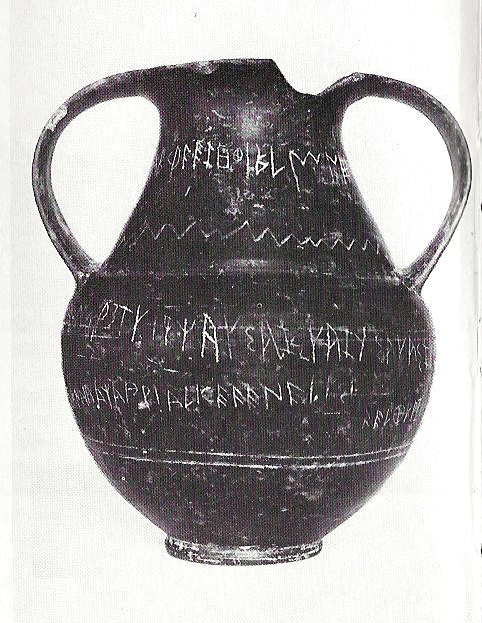 between
the H and the I in the Formello Alphabet from Veii;
Rome, Museo Nazionale di Villa Giulia (from The
Etruscans, Massimo Pallottino, Indiana
University Press, 1975). See Note (2) below for the
use of the K. The word, Chiave, sets the word
following it: LAFES.
between
the H and the I in the Formello Alphabet from Veii;
Rome, Museo Nazionale di Villa Giulia (from The
Etruscans, Massimo Pallottino, Indiana
University Press, 1975). See Note (2) below for the
use of the K. The word, Chiave, sets the word
following it: LAFES.