

Etruscan Phrases – Glossary
by Mel Copeland
(from a work published in 1981)
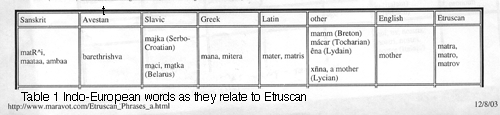 This glossary of Etruscan words is selected from Indo-European Table 1 which is a map showing the relationships of the words found in the Etruscan vocabulary.
Because the Etruscan language is frozen in time (~500 B.C.), it is a good reference on the evolution of related Indo-European languages. Just as we now utilize maps of genetic movement through populations, so too can we map the flow of words through populations using a map similar to Table 1. The most current version of this glossary is in excel format: Etruscan_GlossaryA.xls.
A major effort is now being exercised in mapping languages. Thus, Table 1 follows, and is a part of, that effort. There are many discoveries in Table 1 which are fascinating and bear further investigation. This glossary augments that work.
What is shown in Table 1 is a map of three Indo-European linguistic strands: an Eastern (Blue), a Middle (Green), and a Western group (Red). The Slavic language group, which is in the main represented in Table 1 by Polish, appears in the "green" zone. Sanskrit, Avestan and Persian I placed in the "blue" zone. What is interesting about Table 1 is that some of the solid "green" and "red" zone languages have words that fall into the "blue," Sanskrit zone. German and Gaelic – including Old English – fall solidly into the (Green) zone, and French, Italian, Etruscan and Latin represent the strongest band in Table 1: the red zone.
This section of the glossary contains words from the following pages of Indo-European Table 1. To ascertain cognates that relate to this glossary click on the appropriate page and scroll alphabetically via the Etruscan word. Glossary is also in Excel format, download – sorted alphabeticaly by the Etruscan words (Etruscan_GlossaryA.xls) is the most complete version. See Etruscan Grammar for Etruscan declension and conjugation patterns, which is the working document used in translating the Etruscan scripts, together with Etruscan_GlossaryA.xls. This Glossary has been updated down to the yellow zone.
|
Names of family, mother, father, etc. & numbers
|
mi through piviato (pi8iato)
|
||
|
A through boris
|
plak through reva (re8a)
|
||
|
ca through kfa (kua)
|
ri through semenies
|
||
|
ci through eos
|
senata through suvera (sv8era)
|
||
|
fac through itis
|
ta, te, ti, tu, table (tafle) through tvtin
|
||
|
la through meva (me8a)
|
oce through vra (8r, 8ra)
|
|
English |
Etruscan |
Location |
|
about, over, superb |
SUPER (SVPER) |
N417, Q805 |
|
about, over, superb |
SUPRO (SVPRV) |
Q661 |
|
about, towards |
ERCE |
BS18 |
|
abrade, scrape off |
APRATO (APRaTV) |
N216 |
|
abundance |
OP (VP) |
Q1, Q65, Q95, Q320, Q335, Q416, N31, R286, Aph29 |
|
accelerate, make quick |
CILeR (to quicken) |
Z317, Z386, Z470, Z701, Z1006, Z1065, Z1662, Z1800 |
|
accelerate, make quick |
CILeReS (you qucken) |
Z290, Z872, Z937, Z999, Z1386, Z1807 |
|
accompany |
KOMITE (KVMITE) (you --) |
Aph-2 |
|
Achaia, Greece |
ACIE |
N149, R219, R238, P-1 |
|
Achaia, Greece |
IKIHI |
T-11 |
|
adopt, to |
ASA (he/she adopts) |
Q424, Q775, R596, R607, R653, Z638, Z1345, Z1784 ; |
|
adopt, to |
ASE (you adopt) |
TC46, Q416, R381 |
|
adorn, embellish |
TECUM (TECVM) (adorned) (see cover) |
Z1615, Au13 |
|
adorn, equip |
ORN (VRN) (I equip) |
ZB-1, Z834 |
|
adult, puberty |
POVE (PV8E) |
N341 |
|
Aecai, name of Trojan hero
|
AECAI
|
DM-6
|
|
aegis, shield |
AEKiS |
Z40 |
|
afraid, to fear, have respect for |
VERIER (8ERIER) (to be afraid) (see true) |
Q278 |
|
after, next |
PUIA (PFIA) |
N294 |
| after, next |
PUIA (PVIA)
|
Z1780
|
| after, next |
PUE (PVE)
|
N294
|
|
afterwards, then?
|
POIA (PVIA)
|
TC144, AH-1, AJ-1
|
|
age, lifetime |
AVETUS (AFETVS) |
HT5 |
|
age, lifetime |
AGE (AbE) |
R248, R334 |
|
age, lifetime |
AGES (AbES) |
R661 |
|
Agememnon
|
ACHMEMNVN
|
DM-6
|
|
ai!, oh! |
AI |
Z530, TC71, TC127,| TC260, Au55 |
|
air |
AIR |
J52 |
|
air, to air, ventilate, dry |
ARE (you dry) |
Z769 |
|
Alexander, Prince of Troy |
ELCHINTRE |
DM-8 |
|
alien |
ALENI |
M45 |
|
allow, to
|
LEIS
|
TC150
|
|
allure, to wheedle
|
LACTH
|
Z516
|
|
alone |
SOLA (SVLA) (see sun) |
Z598 |
|
alone |
SOLO (SVLV) |
Z1161, R49, R65 |
|
altar |
AR (See plow and gold) |
AR-1, NC-4, SM-1 |
|
amber |
GLAS (bLAS) |
Q543 |
|
Ana, name |
ANA |
AJ-19, AO-3 |
|
and
|
ETH
|
M78
|
|
and |
ET |
N216, Q701, Q745, R40, R94, R128, R142, R160, TC1, MS-1 |
|
and also, and indeed |
AC |
Z54, Z432, Z1183, Au-1, TC46 |
| and also, and indeed |
AK
|
Z489, Z508, Z1139
|
|
anger |
IR |
J-4 |
|
anger |
IRI |
Z10, Z54, Z245, Z606, Z1807, AP-1 |
|
angry, to become angry |
IRICER (to grow angry) |
R128 |
|
Anio, river, name |
ANIA |
Z1578 |
|
any, some |
CEI |
Q65, K119, TC290 |
|
anyone, anything |
CILVA (CILFA) |
Z1310 |
|
Aph |
APH, name of goddess |
Z19, Au102, N123, Q433, Q475, R306, R314, R437, R447, R521, R596 |
|
Phabas, Apollo (Phoebus) |
PHABAS |
Q906 |
|
x |
PHABETO (PHABETV) |
Q217, Q253, Q263, Q468, Q893, Q899 |
|
Apronai |
Apronai (name, see Ronai) |
BS-5 |
|
applaud, to strike |
PLATO (PLATV) |
N139 |
|
approve, to |
APRO8 (APRV8) |
N268, N341 |
|
arbitrator, judge |
ARBERTORE (AR8ERTVRE) |
N417, R13, R72, R349, R417, G14, G30 |
|
arc, arch, bow |
ARC |
TC127, TC236, TC260, PL-10 |
|
arcade, covered passage |
IAN (see Janus) |
J20, Aph-1 |
|
Arelis, name (Aurelius) |
ARELIS |
Z963 |
|
Ares, Greek god of war |
ARES |
N529 |
|
Argos, capital of Argolis |
ARCO (ARCV) |
R314 |
|
x |
ARCOS (ARCVS) |
TC-7 |
|
Ariphmus |
ARIPHMO (ARIPHMV), name |
Q53 |
|
Arno, river & gens |
ARNA |
Z737 |
|
x |
ARNO |
AE-1, AN-1 |
|
x |
ARNOI |
AJ-1 |
|
x |
ARNOI (ARNVI) |
Au102 |
|
arrange, to compose, tidy |
KOMA (KVMA) (he/she arranges) |
Q871, R294, R633 |
|
x |
KOMIAU (KVMIA8) |
N505 |
|
x |
KOMO (KVMV) (I arrange) |
N748 |
|
arrow, dart |
PINA |
N357, N363, N738 |
|
x |
PINAU (PINA8) |
N638, N670 |
|
x |
PINAS |
Z1397 |
|
x |
PINE |
Z122 |
|
x |
PINES |
Z92 |
|
x |
PINI |
TC71 |
|
x |
PINIE |
N294 |
|
as, like, in the way of |
COM (CVM) |
N378 |
|
x |
KOM (KVM) |
N-1, N31, N149, N184, N391, N417, Q297, Q303, Q468, Q871 |
|
ascent, steep |
ERTI (ascent) |
R87 |
|
x |
ERTO (ERTV) (steep) |
M78 |
|
Asia |
ASI |
S-1 |
|
x |
ASIA |
N647 |
|
ask, to call upon, demand, pose |
POSC (PVSC) (I demand) |
N505, N563, N638 |
|
ask, to demand |
PROCO (I demand) |
Z1080 |
|
x |
PROKIS (PRVKIS) (you demand) |
Z272 |
|
assemble, collect together |
CU (CF) |
Z234, Au76, Au86 |
|
x |
CUA (CFA) (he/she assembles) |
Z1, Z656, Z784, Z1183 |
|
x |
CUE (CFE) (you assemble) |
Z180, Z336, Z1137, Z1236, J18, Au35, Au49 |
|
Athena, pallas |
PALAS |
Au13 |
|
Athens, Athena |
ATHINEM (of Athens, Athena) |
L-7 |
|
attempt, try |
ATENTO (ATENTV) |
Q263, Q369 |
|
Attis, King Atys, father |
ATE |
N160, N349, Q46 |
|
x |
ATES |
N462, R359 |
|
x |
ATIA |
AN-5 |
|
x |
ATI |
Q-11, AM-5 |
|
x |
ATIE |
BS-16 |
|
Atijeries, Atijerius gens |
ATIIERI |
R-1, R22 |
|
x |
ATIIERIA |
Q11, Q24 |
|
x |
ATIIERIE |
R100, R114, R219, R229, R238; |
|
x |
ATIIERIER |
R405, $114 |
|
x |
ATIIERIES |
Q453 |
|
x |
ATIIERIO (ATIIERIV) |
Q243, R88, R181, R195, R565, G21 |
|
avail, to have influence, pose |
POS (PVS) I pose |
R619, R530 |
|
x |
POSE (PVSE) (you pose) |
N349, Q74, R248, J43 |
|
avoid, to shun |
EFITI (you avoided) |
M19 |
|
x |
EFITOS (EFITVS) (we avoided) |
HA-5 |
|
avoid, to evade |
IFETSvM |
Z812 |
|
Bacchus, Euhan, god of wine |
EUN (EFN) |
M45 |
|
back, behind, rear |
POST (PVST) |
N112, N349, N363, Q183, Q754, R447 |
|
bad, evil |
MAV (MAF) (see unfortunate) |
S-8 |
|
bad, to mistrust |
MEVA (ME8A) (he mistrusts) |
LS-4 |
|
x |
PEIU (PEIV) (badly) |
N268 |
|
badly |
PEIS |
Z1292 |
|
bait, food |
ESA |
LS-4 |
|
Balae, holiday resort |
BALE |
L59 |
|
band, girdle |
PHASEI |
Z180, Z347 |
|
barley |
ORK (VRK) |
Z489, Z508, Z761, TC213 |
|
be, to be |
ES (you are) |
Z347, Z439, Z470, Z561, Z572, Z784, Z1027, Z1378, Z1410, Z1438, TC61, N453, |
|
x |
EST (he/she/it is) |
N469, N607, N638, N676, N767, Q46, Q202, Q209, Q217, Q224, Q311, Q543, |
|
x |
ISONT (ISVNT) (they are) |
R229, R619, R661, K43, Pl-2 |
|
x |
RONT (RVNT) (they will be) |
Q453, J48 |
|
x |
SIM (I am) |
Z-1, Z897, Z1192, Q-1 |
|
x |
SOM (SVM) (I am) |
N522, N582 |
|
x |
SOME (SVME) (we are) |
Q278, R339, R474 |
|
x |
SUNT (SVNT) (they are) |
Q701 |
|
be able, to do |
QISI (you did) |
MS13 |
|
be, place name? |
ESTE (he/she/it is, place name?) |
Q821, R65, R459 |
|
beam |
TRAVE (TRaFE) |
S-50 |
|
bear, to carry |
FERE (you bear) |
Q360, Q369, R487, R574 |
|
x |
FERSOM (FERSVM) |
N462 |
|
beat, cut, to kill |
CAITIM (of the cutting, killing?) |
Z674 |
|
beat, to combat |
PUNE (PFNE) (you combat) |
J-4 |
|
because |
CEIA |
TC56 |
|
become, to be made |
FI (see make, do) |
Z1781 |
|
x |
FIA |
Z606, Z614, Z622, Z629 |
|
before, sooner |
ANT |
AP-1, Au30 |
|
x |
ANTA (See go before, excel) |
Z1780 |
|
before, in front |
PRE |
N435, N469, Q162, R31, R88, L65 |
|
before, in front of, for, like |
PRO (PRV) |
AN-5 |
|
beg, to ask |
PREC (I beg) |
N533, N607, N676 |
|
x |
PREK (I beg) |
(L38) |
|
x |
PRECE (you beg) |
R294 |
|
x |
PRECER (to beg) |
R94 |
|
beginning, origin |
ORS (VRS) |
TC56 |
|
behind, after, next |
POSTE (PVSTE) (see back) |
N647 |
|
behold! |
EC |
Z391 |
|
x |
EK |
R664 |
|
bejeweled |
KAMITO (KAMITV) |
Z103 |
|
belonging to, in power of |
PENES |
Q253, K86 |
|
bellow, roar |
mocum (MVCVM) (roaring?) |
Q674 |
|
bend, to; archon, leader |
ARCAS (you bend, hide) |
Q543 |
|
x |
ARCE (you bend) |
Z1578 |
|
x |
ARCES (you bend?) |
AJ-17 |
|
x |
ARCIA (name, leader, archon) |
N53, Q117, Q521, Q683, R499 |
|
x |
ARCIS |
N31, N290, N320, N341, N500, N529, N561, N598, N632, R278 |
|
x |
ARCIO (ARCIV) (to bend) |
N21, N53, N280, N476, N522, N660, Q65, R370, R457 |
|
x |
ARCAMEN (we bend) |
N63 |
|
x |
ARKANI (archons) |
N304, N333, N543, N582, N632 Q723, R270 |
|
betray, hand over, give up |
TRATI (you handed over) |
R88 |
|
bewail, lament |
CERE (you bewail) |
Q331 |
|
x |
CEREN (they bewail) |
Q871 |
|
x |
CERES (you bewail) |
Z133 |
|
x |
CERI (you bewailed) |
Z665, Z737, Z755, Z769 |
|
bind together, to yoke |
IOKA (IVKA) (he/she binds) |
N505, N563 |
|
x |
IOCE (IVCE) (you bind) |
Z665 |
|
x |
IOCES (IVCES) (you bind) |
Q468 |
|
x |
IOCI (IVCI) (you bound) |
N476, Q53, Q162, Q209, Q243, Q416, R258 |
|
x |
IOCO(IVCV) (I bind) |
N711 |
|
x |
IOKI (IVKI) (jockey, horseman?) |
J25, AE-6, N-1, N357, N476, R306, K36 |
|
x |
IOCIE (IVCIE) (jockeys, horsemen?) |
K36, Q217 |
|
birth, bringing forth young |
FETRA (he/she brings forth) |
M78 |
|
x |
FETURE (FETVRE) (See fetus) |
N435, N513, N638, R270, R286, R394, R505 |
|
black, dark, dead |
ATER |
Z489 |
|
black, to become black |
ATRO (ATRV) |
HA-3 |
|
blackbird |
MARLE |
N404 |
|
blessed |
VEITU (8EITV) |
N63, N194, N268, N304, N324, N333, N483, N491, N505, N700, N725, Q488, Q500, R394 |
|
blind, to make, hide |
CACE (he makes blind, hides) |
N311 |
|
blood |
KROVE (KRVFE) |
Z592 |
|
boat, barque |
BERCA |
M-8 |
|
body, carnal, flesh |
CARNA |
L-15 |
|
x |
CARNAL |
R459, R542 |
|
x |
CARNIS (bodies) |
Z1216 |
|
x |
KARNE (you are carnal?) |
Z1243 |
|
x |
KARNOS (KARNVS) (we are--) |
Z1177 |
|
Boii (Celts of N. Italy) |
VOIA (8VIA) (see devour) |
Q278 |
|
bone |
OS (VS) (see mouth) |
ZB-3, Z176, Z455, Z1006, Z1243, Z1386, TC260, TC271, AJ17, DL-7, N236, R661 |
|
x |
OSUIS (VSFIS) (bony? ossuary?) |
Z47, Z681, Z834, TC201 |
|
Boris, name, wind |
BORIS (BVRIS) |
R219, R238 |
|
born, to be |
NAC |
Q701, R511 |
|
x |
NAK |
M19 |
|
x |
NAKUA (NAKFA) |
AH-3, Z263, Z432, Z1227, Z1591, Z1623, Au-1, Au55, Au74, L15 |
|
x |
NACIM (born of) |
Z887, Q303 |
|
x |
NACUS (NAKFS) |
Z522, Z905 |
|
x |
NAI |
AM-6 |
|
x |
NAS |
TC170, TC231, J35, K13, AD-1, AE-1, AK-1, AN-1, AN12, AN31, R5 |
|
x |
NATINE |
Q243, R565 |
|
born again, to be |
ReNAIX |
S15 |
|
boundary |
TERMeNES |
N206 |
|
x |
OR (VR) (see speak) |
Z308, Z421, Z1789, TC19, TC46, TC266, Q217, R-1, R-5, R108, Au85 |
|
x |
ORAS (VRAS) |
TC19, TC161, |
|
boy, young boy, cherub |
PULESI (PVLESI) |
TC179, TC213, |
|
bramble |
ROVATO (RV8ATV) |
M19 |
|
branch |
RAMOER (RAMVER) |
Z826 |
|
breast, mammary |
MAM |
N100, N112, N469 |
|
x |
MAMAR |
Z5525, Z263, Z432, Z614, Z681, Z887, Z1080, Z1274, Z1410, Z1591, Z1864 |
|
breath, wind |
LENA (see lioness, relieve) |
M67 |
|
bring out, produce, give birth |
ETA (he/she produces) |
AD-1 |
|
x |
ETES (you produce) |
Z1292, Z1326 |
|
x |
ETO (ETV) (I produce) |
N230, N244, N254 |
|
bronze, metal |
AIS |
M32 |
|
brood, to incubate |
COV (CV8) (I breed) |
R251 |
|
x |
COVRO (CV8RV) |
N74, N100, N149, N160, N254, N404, N417, Q65, Q84, Q95, Q107, Q320, Q326, |
|
brother |
BRATER (8RATER) (frater) |
R-1, R100, R156, MS14 |
|
x |
BRATER (8RATeR) (frater) |
R164, G-1 |
|
x |
BRATRO (8RATRV) |
Q243, Q294, R88, R565 |
|
x |
BRATROM (8RATRVM) (of the-) |
Q320 |
|
x |
BRATROS (8RATRVS) (fratres) |
Q424, Q468, Q522, Q551, R229 |
|
Brutusi, gens |
BRuTOSU (BRuTOSY) |
Q243, Q294, R88, R565 |
|
bull |
TAR |
Z10, Z150, M-1 |
|
bull-like, cow-like? Name? |
TARINA |
N173, N184 |
|
burn, incinerate |
CINA (he/she burns) |
Q320 |
|
x |
CINAS (you burn) |
Q424, Q468, Q521, Q551, R229 |
|
x |
CINE (you burn) |
F28 |
|
x |
CINI (you burnt) |
TC46, N41, N491, N543, N573, N598, N615, N647, N689, N711, Q435, Q422, Q481 |
|
x |
CINO (CINV) (I burn) |
N11 |
|
x |
CINOS (CINVS) (we burn) |
N139 |
|
burn, to scorch |
OSAIE (VSAIE) |
N453 |
|
x |
OSE (VSE) (you burn) |
J45 |
|
x |
OSI (VSI) (you burnt) |
Z47, Z681, Z834, TC201 |
|
x |
OSIA (VSIA) (noun? See Osia) |
J25 |
|
x |
OSUIS (VSFIS) (see bone) |
Z47, Z681, Z834, TC201 |
|
bury, carry out (to grave) |
EFEREI |
N139 |
|
bury, to ruin, destroy |
SEPeLES (you bury) |
Q369 |
|
bush |
BRATA (8RATA) |
N53, N216, N483, N624, Q84, Q127, R370, R447, R607, R619, Aph-7 |
|
by that way |
ILA |
N230, N244 |
|
x |
ILAC |
M78 |
|
KAINA, name |
KAINA |
R212 |
|
x |
CAINA |
Au35, Au49 |
|
call, to |
ACA |
Au55 |
|
x |
ACI |
AB-1 |
|
x |
ACIS |
NC-3 |
|
call, summon, to |
CAL (I call) |
Z572, TC46, Au67, Au90 |
|
x |
CaLA (he/she calls) |
Z582 |
|
x |
CaLa |
R349 |
|
x |
KALA (He/she calls) |
Z1408 |
|
x |
KaLaS (you call) |
Z463, Z540, Z1408 |
|
x |
KaLE (you call) |
K46, AH-7 |
|
x |
KaLV (to call) |
L38, N149, Q737, R542 |
|
x |
KALI (you called) (See dropped) |
N533 |
|
callous, hard, possibly name |
CALOS (CALVS) |
R114 |
|
Kaneri, possibly name |
KANERI |
Q369, Q388, R56, R108, R121, R133, R150, G-1 |
|
Canin, name, Cannae? |
CANIN |
Q360 |
|
cap |
CAP |
M-1 |
|
x |
CAPE (you cap?) |
BS-11 |
|
Capari, name? |
CAPARI |
Z19, Z29, Z1177 |
|
Capui, name Capua? |
CAPUI (CAPVI) |
N149 |
|
care for, to |
CAR (I care for) (alt. heart) |
K74 |
|
x |
CARO (CARV) (to care for) |
ZB-4, Z842, Z1770 |
|
care for, dear, high-priced |
KARE (you care for) |
Au67 |
|
x |
KAREN (they care for) |
Z582 |
|
x |
KARO (KARV) (to care for) |
K13 |
|
x |
KARETO (KARETV) (dear) |
Q406 |
|
carry, bear away |
AFEF (Aveu) |
R219 |
|
carry away or down |
TEVRA (TE8RA) (he, she carries away) |
Q500, R474 |
|
x |
TEVRE (TE8RE) (you carry away) |
N638 |
|
x |
TEVRI (TE8RI) (you carried away) |
N676 |
|
carry, to convey, sail |
FE |
N294 |
|
case, instance |
CASUS (CASVS) |
N341 |
|
cassock, coat |
SOTANAS (SVTANAS) |
Z263, Z405 |
|
Catene, name |
CATeNE |
Z1300 |
|
x |
CATeNIS |
Z5, Z929, TC161, TC236, TC266, Au67, AL-1 |
|
Cato, gens, cunning |
CATE (you are wise?) |
Q821 |
|
x |
CATES (you are wise?) |
Z1386 |
|
x |
CATO (CATV) |
Z1326 |
|
x |
KATO (KATV) |
Z1586, N216 |
|
x |
KaTO (KaTV) |
AN-20, AN-37 |
|
x |
CATOS (CATVS) |
N41, N160, N280, N417, N483, N553, N624 |
|
x |
KATE (you are wise?) |
Q334, Q512, R437, R521, R565, R584 |
|
x |
KATI (you were wise?) |
R487 |
|
cause, to pretend |
CASE (you cause, a cause?) |
N206, N254 |
|
x |
KASE (you cause, a cause?) |
R238, R653 |
|
x |
CASI (you caused, causes?) |
N311, N378 |
|
cause, to give reason |
COSO (CVSV) ( I give reason) |
R22, R114 |
|
x |
COSOR (CVSVR) (to give reason) |
N74 |
|
x |
COSOS (CVSVS) (causes, reasons) |
M13 |
|
cede, surrender |
CETO (CETV) (to cede) |
TC127, TC241, TC271, TC279, TC307, AM-3 |
|
cell, chamber |
CARSI |
TC56, TC161, TC179 |
|
cellar, store-room |
SELUR (SELFR) |
Z692 |
|
Celts, Celtae-arum |
CELTO (CELTV) (see to hide) |
TC283 |
|
Cephes, Greek god, name |
CEPHES |
N311, N378, Q162 |
|
x |
CEPHII (gens, Cephii, plural) |
Z1319 |
|
x |
KEPHES |
Q813 |
|
chamber, vault |
CaMaReM (of the chamber) |
N469 |
|
chariot, two-wheeled cart |
CISOM (CISVM) (see wagon) |
N607, N638 |
|
x |
COKIE (CVKIE) (see wagon) |
Q406 |
|
Charon, ferryman of Hades |
KARON (KARVN) |
M74 |
|
cherish, fondle, pet |
KUA (KFA) (he/she cherishes) |
Z84, Z111, Z214, Z308, Z378, Z455, Z953, Z1057 |
|
x |
KUE (KFE) (you cherish) |
Z59 |
|
x |
KUE (KFE) (you cherish) |
Tomb inscription above his head |
|
cherry |
SIRES |
Z872 |
|
chimera |
KIMeR |
Z19, Z40, Z191, Z674, Z1250, Z1607, Z1623 |
|
Cilen, gens |
CILEN |
N462 |
|
x |
CILENI |
N462 |
|
Cilerii, gens |
CILeRII |
Z1203, Z1562, K131 |
|
cite, to summon, quote |
CITA (he/she cites) |
PL-3, PL34 |
|
x |
CITI (you cited) |
PL22 |
|
x |
CITO (CITV) (to cite) |
K79 |
|
x |
CITHO (CITHV) I (to cite) |
J54 |
|
Citlo, gens? |
CITLAV (CITLA8) |
Z439, Z421 |
|
x |
CITLO (CITLV) |
Q512, Q543, Q692, Q775, Q795, Q821, R437, R499 |
|
x |
CITLOV (CITLV8) |
Q806 |
|
x |
CITLOP(CITLVP) (verb?) |
N324 |
|
clean |
NETI |
Z1088 |
|
Clear, bright |
CLERI (he/she/it was clear) |
Q202, Q229 |
|
Clerii, name, gens? |
CLeRII |
N-1 |
|
Clenar, name, gens? |
CLENAR |
N31 |
|
x |
CLENaRON (CLENaRVN) |
Z317, Z380, Z960, Z1006, Z1065, Z1801 |
|
CLENSI, name, gens? |
CLENSI |
TC28 |
|
close, to shut |
CLOTRA (CLvTRA) |
AF-1 |
|
CN, abbreviation of a name |
CN |
Z190,Z289, Z851, Z897, Z929, Z1168, Z1203, Z1236, Z1359, Z1372, K107, K136, |
|
collect, thicken, congeal |
COKAR (CVKAR) (to congeal) |
AJ-17 |
|
x |
COKE (you congeal) |
N462 |
|
x |
COKO (CVCV) (I congeal) |
Q406 |
|
x |
COGI (CObI) |
N-1, N31 |
|
column, neck |
KOLEM (KVLEM) (see cultivate) |
Q243 |
|
comb |
PETeNA (see five, petition) |
Z1227 |
|
come, to arrive |
FENI (you came) |
Z1600 |
|
x |
FENIAS (he/she came) |
M81 |
|
x |
VeNER (8eNER) (to come) |
Z150, Z1853 |
|
x |
VeNES (8ENES) (you come) |
K43 |
|
x |
VeNeSI (8eNeSI) (see Venice, Veniti) |
K52 |
|
x |
VENO (8ENV) (I come) |
N41 |
|
x |
VeNO (8eNV) (I come) |
N268 |
|
x |
VENUS (8ENVS) (we come; see Venus) |
Q152 |
|
come through, to arrive |
PEVENES (PE8eNeS) |
K20 |
|
consecrate, to sanctify |
SANTI (you sanctified) |
Z1282 |
|
x |
SANTIS (you sanctified) |
Z1337 |
|
consider, to think |
PENSIN (they think) |
Z19 |
|
conspire, to take an oath |
CONA (CVNA) (he/she pledges) |
Au27 |
|
x |
KONA (KVNA) (he/she pledges) |
K32, K131 |
|
x |
CONO (CVNV) (I / to pledge) |
Aph-3 |
|
continue, to proceed |
PERK (I continue) |
N160 |
|
controversy, polemic |
POLOMiK (PVLVMiK) |
Au71, Au99 |

Notes:
(1)

 Please beam me up to Etruscan_Phrases home
Please beam me up to Maravot's_Index.html
Launched 5.27.06
Updated: 5.28.06; 5.29.06; 5.31.06; 6.04.06; 6.14.06; 8.06.06; 8.07.06; 1.15.09
Copyright © 1981-2009 Maravot. All rights reserved.
Copyright © 1981-2009 Mel Copeland. All rights reserved.